

Direct Booking Website for Short Term Rental: Full Setup Guide


A direct booking website for short term rental properties is a branded, owner-controlled site where guests book stays directly with you instead of through Airbnb or VRBO, cutting out platform commission fees on every reservation. At Maverick STR, we've built more than 50 of these sites for vacation rental owners and property management companies, and the ones that actually generate revenue share a specific set of technical and content decisions this guide walks through step by step.
What it is: A direct booking website for short term rental hosts is a self-owned booking engine, separate from Airbnb, VRBO, or Booking.com, that captures guest reservations without paying 3-15% platform commission on each stay.
Why it matters in 2026: According to Wander, 37.5% of short-term rental operators generated more direct bookings in 2026 than they did in 2026, and that shift is accelerating as guests search for supplier sites directly.
Mobile is non-negotiable: Avantio reports that nearly 60% of travel searches for short-term rentals happen on mobile devices, meaning a site that isn't fast and responsive loses the majority of its potential traffic before a guest ever sees availability.
Speed matters for SEO: Avantio also notes that website pages should load in under 3 seconds to reduce bounce rate and support local search rankings.
Real results are possible: One Maverick STR client saw a 115% increase in direct booking revenue after rebuilding their site architecture around SEO and conversion best practices.
It's a process, not a purchase: A functioning direct booking site requires booking engine integration, SEO-ready content, mobile optimization, and ongoing traffic generation, not just a one-time build.
If you're reading this, you've probably already felt the sting of an OTA payout that's noticeably smaller than the nightly rate you actually charged. That gap between what the guest pays and what lands in your account is the entire reason direct booking exists as a strategy. It isn't a replacement for Airbnb or VRBO, but a parallel channel that reduces your dependence on them over time.
This guide covers the exact build process for a direct booking website for short term rental operations in 2026, from choosing a booking engine to driving the first wave of qualified traffic. We'll cover platform selection, technical requirements, content strategy, and the common mistakes that leave a beautifully designed site sitting empty. Whether you self-manage one property or run a portfolio, the fundamentals below apply the same way.
At Maverick STR, our team builds direct booking websites for vacation rental owners nationwide and manages properties hands-on in Nashville, TN and Charleston, SC. We've watched the same pattern repeat across dozens of builds: owners who treat the website as a marketing asset, not a digital brochure, see traffic and bookings compound month over month.
What Is a Direct Booking Website for Short Term Rental Owners?
A direct booking website for short term rental owners is a standalone site, hosted under your own domain, where guests can check availability and pay for a reservation without going through a third-party marketplace like Airbnb or VRBO. Unlike a listing profile, you own the design, the guest data, and the booking relationship entirely.
Specifically, the site includes three core components: a booking engine (the software that manages calendar availability and processes payment), a content layer (property pages, photos, local guides), and a technical foundation (hosting, domain, SSL certificate, mobile responsiveness). Without all three working together, the site either doesn't function as a booking tool or doesn't attract organic traffic.
As a result, a direct booking website functions differently than a listing on Airbnb. Airbnb controls the algorithm, the guest messaging, the review system, and takes a service fee on every transaction. Your own site, by contrast, gives you full control over pricing display, upsells, guest communication, and search engine visibility, though you're also responsible for driving the traffic Airbnb would otherwise provide for free.
Named platforms in this space include CraftedStays, which won the Website Builder of the Year 2026 award from Travel & Hospitality Tech, and Lodgify, both of which offer booking-engine-integrated site builders designed specifically for vacation rental owners rather than generic small business templates.
Why Do Short Term Rental Owners Need a Direct Booking Site?
Short term rental owners need a direct booking site to reduce reliance on OTA commission fees and build a repeat guest base that platforms like Airbnb don't let you access directly. Specifically, every booking made through Airbnb or VRBO comes with a service fee cut, and you never receive the guest's email address or phone number for future marketing.
For example, a guest who books your property through Airbnb belongs to Airbnb's ecosystem, not yours. If they loved their stay and want to rebook next year, Airbnb's algorithm decides whether your listing even resurfaces in their search. A direct booking site changes that dynamic by capturing the guest relationship for repeat visits, referrals, and email marketing.
Additionally, Skift Research reports that direct bookings are on the rise, driven by travelers' growing preference for supplier websites over OTA marketplaces. This shift matters because guests who search "[property name] direct booking" or "[destination] vacation rental" are already primed to book off-platform if your site ranks and converts well.
In Nashville specifically, short-term rentals accounted for 11% of overnight lodging bookings in Davidson County in 2023, and the market is projected to see over 1.3 million annual visitors using short-term rentals by 2026, according to The Tennessean, citing Nashville Convention & Visitors Corp data. That growth means more competition for OTA visibility, which makes a direct channel increasingly valuable as a hedge.
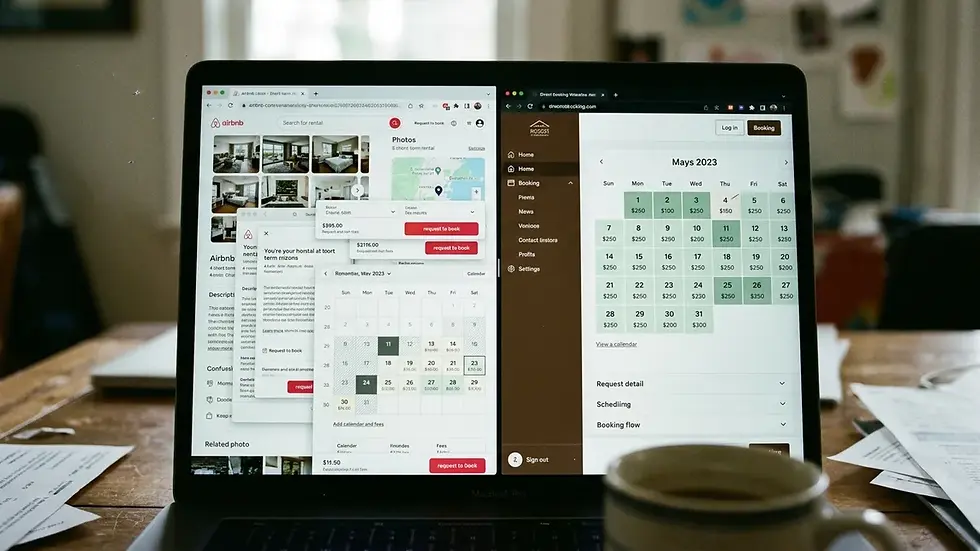
How to Build a Direct Booking Website for Your Short Term Rental (2026)
How Do I Choose a Booking Engine for My Direct Booking Site?
Choosing a booking engine for a direct booking website means evaluating whether the software integrates with your existing property management system (PMS), supports the payment processing you need, and updates your calendar in real time to avoid double bookings. Specifically, the booking engine is the transactional core of the site, everything else is marketing wrapped around it.
First, confirm PMS compatibility. If you already use a channel manager to sync Airbnb, VRBO, and Booking.com calendars, your direct booking engine needs to plug into that same system so availability stays accurate across every channel. Lodgify offers a free trial that lets you test this integration before committing, and you can also book a call with Lodgify for a personalized walkthrough of PMS compatibility.
Second, look at conversion-focused design. Guesty's own research notes that a standard website builder isn't enough for direct booking conversion because generic templates aren't built around the specific UX patterns (instant pricing, calendar-first navigation, mobile-optimized checkout) that vacation rental guests expect. Guesty's direct booking website features include automatic search engine indexing support, which matters for the SEO discussion below.
Third, weigh cost against features. Entry-level booking engines run cheaper but often lack SEO-friendly URL structures or content management flexibility. As of 2026, purpose-built STR platforms like CraftedStays have closed much of that gap by combining booking functionality with content architecture designed for organic search from day one, which is exactly why we point property management company clients toward this category rather than DIY page builders.
Common Mistake: Choosing Design Over Function
Many owners pick a booking engine based purely on how the templates look, then discover six months later that the platform can't handle basic SEO requirements like custom meta descriptions or clean URL slugs. Test the admin backend before committing, not just the guest-facing preview.
What Technical Requirements Does a Direct Booking Website Need?
A direct booking website needs mobile responsiveness, fast load times, secure payment processing, and clean site architecture to function as both a booking tool and a search-visible asset. Specifically, these four technical pillars determine whether guests can find the site and whether they trust it enough to enter payment information.
Mobile responsiveness comes first because, per StatCounter's global platform market share data, well over half of worldwide website traffic happens on mobile devices, a figure corroborated by Statista's mobile traffic statistics. Ethan Marcotte, who formally defined responsive web design, established that true responsiveness requires fluid grids, flexible images, and CSS media queries, not just a "mobile-friendly" label slapped on a desktop layout.
Load speed is the second pillar. Avantio's research states that pages should load in under 3 seconds to reduce bounce rate and support local SEO rankings. In practice, this means compressing property photos with a tool like TinyPNG before uploading them, since uncompressed high-resolution images are the single most common cause of slow-loading vacation rental sites.
Third, secure payment processing (SSL certificates, PCI-compliant checkout) isn't optional, it's the baseline trust signal that determines whether a guest completes a booking or abandons the page at checkout. Fourth, site architecture, meaning clean URL structures and a logical page hierarchy, allows search engines to crawl and index your property pages efficiently, a factor Screaming Frog SEO Spider can audit for free on smaller sites.
Responsive Design Examples Worth Studying
If you want to see responsive design principles in action outside the STR industry, Dribbble showcases layout examples where a desktop grid collapses cleanly into a single mobile column. Etsy demonstrates mobile-first search prioritization, relevant because STR guests browse similarly, arriving with a specific destination in mind and needing fast access to availability. Fable's property showcase site, built in Webflow, offers a property-adjacent example of flexbox-based responsive reordering that maintains visual hierarchy across screen sizes.
How Do I Get SEO Traffic to My Direct Booking Website?
Getting SEO traffic to a direct booking website requires targeting specific, high-intent keywords tied to your property and destination, then building content around those terms consistently over time. Specifically, ranking for generic terms like "vacation rental" is nearly impossible for an individual property site, but ranking for "[property name] Nashville" or "[neighborhood] bachelorette house" is achievable within months.
First, conduct keyword research using free tools like Keyword.io or Google Keyword Planner, or invest in a paid platform like the SEMRush SEO platform or Ahrefs for deeper competitor gap analysis. Focus on long-tail, location-specific phrases rather than broad industry terms, since a single property site will never outrank Airbnb for generic searches.
Second, claim and optimize your Google Business Profile. This free listing appears in local map searches and is one of the fastest ways for a new direct booking site to start showing up when travelers search for accommodations in your specific neighborhood, whether that's East Nashville, Mount Pleasant, or Folly Beach.
Third, publish content consistently. This is the piece most owners skip, and it's the piece that compounds. Our team at Maverick STR has driven 3-5x monthly organic traffic growth within the first 3 months for direct booking website clients by pairing technical SEO fixes with a steady content calendar covering local guides, event calendars, and neighborhood comparisons. If you want a deeper breakdown of this process, our guide on vacation rental SEO for direct bookings covers keyword strategy in more depth than we can fit here.
Should I Use Paid Ads Alongside My Direct Booking Website?
Paid advertising alongside a direct booking website fills the traffic gap while organic SEO rankings build over time, since SEO typically takes months to show meaningful results while ads can generate visibility within days. Specifically, this combination works because paid traffic buys you time and data while organic content compounds in the background.
For a destination market, Google Hotel Ads lets you target travelers actively searching for accommodations in a specific location, competing directly with OTA listings in the same search results. Metasearch platforms like Trivago can also drive cost-free or low-cost traffic to a direct booking page when configured correctly, giving you another channel beyond paid search alone.
As a result, we typically recommend property owners run both strategies in parallel: paid campaigns for immediate bookings during shoulder seasons or slow weeks, and organic SEO content that reduces ad spend dependency as rankings mature. Maverick STR manages both paid and organic strategy together for exactly this reason, since running them in isolation usually means overpaying for traffic that SEO could eventually capture for free.

What Content Does a Direct Booking Website Need to Convert Guests?
A direct booking website needs high-quality property photos, detailed amenity descriptions, transparent pricing, guest reviews, and local area content to convert visitors into paying guests. Specifically, guests arriving on your site haven't yet built the trust that Airbnb's review system and buyer protection provide automatically, so your content has to do that trust-building work instead.
Property pages should include comprehensive amenity lists, not vague summaries. Our own managed property Underwood Manor, for example, lists specifics like a 7-person hot tub, a speakeasy-style game room with an 8-foot pool table, and unlimited Nespresso coffee, details that let a guest visualize the stay rather than guessing. Vague copy ("nice amenities, close to downtown") converts at a noticeably lower rate than specific, sensory detail.
Additionally, embed real guest reviews pulled from your Airbnb or VRBO listing history if you have them, since new direct booking sites lack the built-in trust signals of an established OTA profile. If you're launching a new property with no review history yet, lean harder on high-resolution photography and, where budget allows, a Matterport virtual tour to let guests explore the space before booking.
Local area content, meaning guides to nearby restaurants, attractions, and event calendars, also matters more than most owners assume. This content ranks for informational searches ("things to do near Broadway Nashville") that bring in new visitors who then discover your property page organically, a strategy our vacation rental marketing team builds into every direct booking site we launch.
Direct Booking Website Costs and Platforms Compared
Direct booking website costs vary widely depending on whether you choose a DIY template builder, a purpose-built STR platform, or a custom development build, with monthly costs typically ranging from under $30 for basic template subscriptions to several hundred dollars or more for fully custom, SEO-optimized sites with ongoing content support.
Option | Best For | SEO Capability | Booking Engine Integration | Ongoing Effort Required |
DIY template builder (Squarespace, Wix) | Single-property owners with no SEO goals | Limited, requires manual configuration | Often needs a third-party plugin | High, owner manages everything |
Purpose-built STR platform (CraftedStays, Lodgify) | Owners who want PMS sync and booking-first UX | Moderate to strong, built for the category | Native, designed specifically for STR calendars | Moderate, still needs content strategy |
Custom-built site with SEO architecture | Multi-property owners and management companies | Strongest, built around keyword strategy from the start | Fully customized to existing PMS | Lower, once launched with a content plan |
Notably, the cheapest option upfront often becomes the most expensive over time once you factor in lost SEO traffic and the added cost of retrofitting a template site for search visibility later. A property management company client of Maverick STR chose the custom route specifically because a template builder couldn't handle the multi-property page architecture their portfolio required.
What Mistakes Should I Avoid When Building a Direct Booking Site?
The most common mistake short term rental owners make when building a direct booking site is launching the website and expecting traffic to appear without any ongoing SEO or marketing investment. Specifically, "build it and they will come" doesn't apply to direct booking sites the way it might to a portfolio page, because there's no built-in audience the way Airbnb's marketplace provides.
Skipping keyword research before writing content. Publishing generic pages without targeting specific search terms means Google has nothing distinct to rank the page for.
Ignoring page speed. Uncompressed photos and bloated page builders push load times past the 3-second threshold Avantio identifies as the bounce-rate tipping point.
Forgetting mobile guests entirely. With the majority of travel searches happening on mobile devices, a desktop-only design loses the bulk of potential bookings before they even see availability.
Launching without a content plan. A site with five static pages and no blog or local guide content has nothing new for search engines to index month over month.
Underpricing the direct channel. Some owners undercut their own OTA rates so aggressively that they trigger rate parity issues with Airbnb or VRBO. A small, sustainable direct-booking discount plus a value-add (free late checkout, no service fee) tends to perform better long-term.
One of our owners came to Maverick STR with a property that had been projected to do $60,000 in its first year, and after we rebuilt the marketing strategy around direct booking and revenue management together, that same property closed the year at $100,000. The direct booking site was one piece of that puzzle, not the entire strategy, but it mattered.
How Long Does It Take to See Results From a Direct Booking Site?
Most direct booking websites take three to six months to start generating meaningful organic traffic, with paid advertising able to produce bookings much faster in the first few weeks while SEO rankings build in the background. Specifically, this timeline depends heavily on domain age, content volume, and how competitive your destination market is for search terms.
A brand-new domain in a competitive market like downtown Nashville takes longer to rank than a niche property in a smaller submarket with less search competition. As of 2026, Google's algorithm continues to reward sites with consistent content publication and strong technical fundamentals over sites that launch once and go quiet, which is why our team treats every direct booking build as an ongoing content relationship, not a one-time project.
For property management companies managing this process for owner clients, patience and clear expectation-setting matter as much as the technical build itself. Owners who expect immediate results from a direct booking site often abandon the strategy before it has time to compound, missing the payoff that consistent SEO and content investment eventually delivers.
Quick-Reference Summary: Building a Direct Booking Website Step by Step
Step 1: Choose your booking engine based on PMS compatibility, not just design aesthetics.
Step 2: Confirm technical requirements, including mobile responsiveness, sub-3-second load times, and SSL security.
Step 3: Build keyword-targeted content for each property page plus supporting local guides.
Step 4: Claim your Google Business Profile and optimize it for local search visibility.
Step 5: Layer in paid advertising through Google Hotel Ads or metasearch platforms while SEO rankings build.
Step 6: Publish content consistently, not just once at launch, to keep the site relevant to search engines.
Step 7: Track results over a 3-6 month window before judging whether the strategy is working.
Frequently Asked Questions
How much does a direct booking website for short term rental cost to build?
Costs range from under $30 per month for a template-based booking engine subscription to several hundred dollars monthly for a custom-built site with SEO architecture and ongoing content support. The right choice depends on portfolio size and whether organic search traffic is a primary goal or a secondary bonus.
Can a direct booking website really reduce my Airbnb and VRBO fees?
Yes, every reservation made through a direct booking site avoids the OTA service fee charged on Airbnb and VRBO bookings, though the site still needs traffic to generate reservations in the first place. Guests who book directly are typically repeat visitors or referrals who already trust your property, which is why building that guest list over time matters.
How long does it take to see results from vacation rental SEO?
Most owners see initial organic traffic movement within three to six months, with meaningful booking volume typically following after that. Domain age, market competition, and content publishing consistency all affect this timeline, and paid advertising can bridge the gap for immediate bookings in the meantime.
Do I need a property management company to build a direct booking website?
No, but many owners find the ongoing SEO and content requirements time-consuming to manage alone alongside guest communication and turnovers. Property management companies like Maverick STR handle both the technical build and the ongoing marketing strategy, which is often the piece self-managed owners abandon first.
What's the difference between a direct booking website and a listing on Airbnb?
A direct booking website is a self-owned, standalone site where you control design, pricing display, and guest data, while an Airbnb listing exists within Airbnb's marketplace, subject to their algorithm, fee structure, and guest messaging system. The two aren't mutually exclusive, most successful owners run both channels simultaneously.
Should I offer a discount for direct bookings?
A modest discount or value-add, like a lower cleaning fee or free late checkout, can incentivize guests to book directly, but discounting too aggressively risks violating OTA rate parity agreements. Focus on providing enough incremental value that guests choose the direct channel without undercutting your Airbnb or VRBO pricing significantly.
What platforms work best for building a direct booking site in 2026?
Purpose-built STR platforms like CraftedStays and Lodgify generally outperform generic template builders because they include native booking engine integration and SEO-friendly architecture from the start. Custom-built sites offer the most flexibility for multi-property portfolios or management companies, though they require a larger upfront investment.
The Bottom Line on Direct Booking Websites in 2026
A direct booking website for short term rental owners is no longer optional if you want to reduce OTA dependency and build a sustainable, repeat-guest revenue stream. As Skift's research shows, travelers increasingly prefer booking directly with suppliers, and that trend is only strengthening as we move through 2026. The owners who invest in the technical build, the content strategy, and the ongoing SEO work now will be the ones capturing that shift.
The path forward is straightforward but not instant: choose a booking engine that fits your PMS, get the technical fundamentals right (speed, mobile, security), build content around real search intent, and treat the site as a long-term asset rather than a launch-and-forget project. Owners who follow that sequence, rather than skipping straight to a template and hoping for traffic, consistently see the strongest results.
If building and marketing a direct booking site feels like more than you have bandwidth for on top of managing guests and turnovers, Maverick STR has built more than 50 direct booking websites for vacation rental owners and property management companies nationwide, with clients seeing gains like 3-5x organic traffic growth within three months and a 115% increase in direct booking revenue for one property.

Whether you need a full custom build, ongoing SEO support, or just a second opinion on your current site's technical setup, our team works with owners across Nashville, Charleston, and nationwide on the digital side of this strategy. Get started with Maverick STR for a walkthrough of what a direct booking site could look like for your property.
Written by Chase Gillmore, Owner & Operator at Maverick STR
Content powered by inkSTR.co


Comments