

STR Tech & Tools Guide 2026: The Complete Owner Stack

Updated: Aug 3

STR tech & tools refers to the software and platforms short-term rental owners use to manage bookings, set pricing, communicate with guests, and market properties without doing every task by hand. At Maverick STR, we build technology stacks for owners across Nashville and Charleston every week, and the pattern is consistent: owners who pick the right five or six tools outperform owners running twelve disconnected apps. In 2026, the winning stack is smaller and smarter, not bigger.
Key Takeaways
A working STR tech stack typically covers five core categories: a property management system (PMS), dynamic pricing software, a direct booking website, guest messaging automation, and analytics reporting.
Dynamic pricing tools like PriceLabs, Beyond Pricing, and Wheelhouse adjust rates using local demand signals; Maverick STR's revenue management clients consistently perform in the 90th percentile of their market.
A custom direct booking website paired with SEO reduces reliance on OTA commissions; Maverick STR clients have seen direct booking revenue increase by 115 percent after launch.
Owners managing three or more properties or living out of state benefit most from centralized PMS software rather than manually tracking calendars across platforms.
Guest communication automation can handle the majority of routine questions (check-in codes, parking, WiFi) without eliminating the personal touch guests still expect.
Tool sprawl, meaning too many disconnected apps that do not talk to each other, is one of the most common and costly mistakes self-managed owners make.
Short-term rental technology has moved past the "nice to have" phase. As of 2026, the gap between an owner running a manual spreadsheet-and-text-message operation and one running an integrated software stack shows up directly in occupancy and nightly rate. This guide breaks down what each category of STR tech actually does, which tools are worth paying for, and where owners waste money on redundant software.
We wrote this from the operator's chair, not a review blog's chair. Every recommendation here reflects what we've deployed managing properties in Nashville and Charleston, plus the marketing and revenue systems we build for clients nationwide. If you're a first-time host trying to decide what to buy first, or a multi-property investor trying to untangle a messy stack, this is the resource to bookmark and come back to.
Table of Contents
What Are the Core STR Technology Categories?
STR tech & tools break down into five functional categories: property management systems, dynamic pricing engines, direct booking websites, guest communication automation, and portfolio analytics. Each solves a specific operational bottleneck, and most owners only need one solid tool per category, not three overlapping ones.
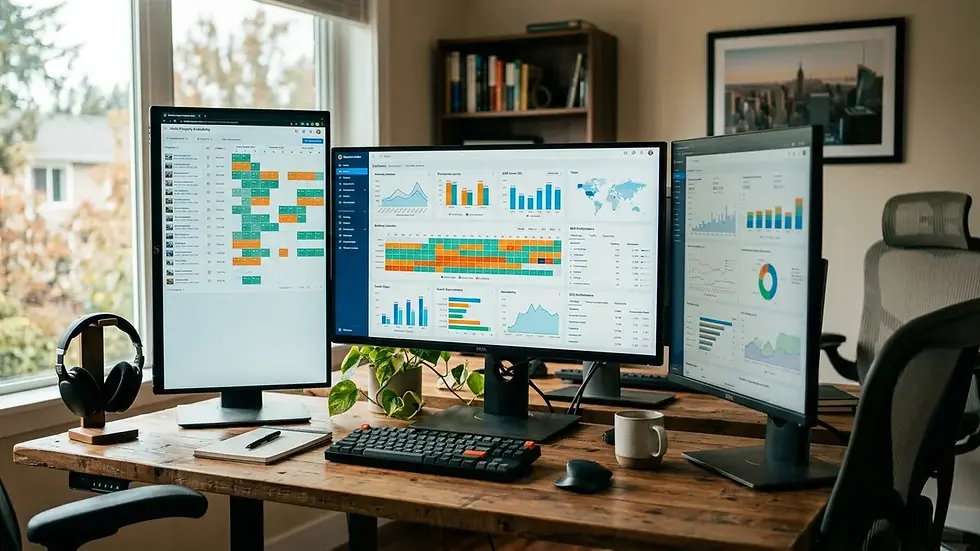
A PMS acts as the central nervous system, syncing calendars across Airbnb and VRBO so you never double-book. Dynamic pricing software feeds that PMS real-time rate recommendations based on local events, seasonality, and comparable listings. A direct booking website captures guests who would otherwise pay OTA commissions. Messaging automation answers the repetitive questions that eat your evenings. Analytics dashboards tell you, in plain numbers, whether the whole system is actually working.
The mistake we see constantly at Maverick STR is owners buying tools in the wrong order. They'll invest in a fancy pricing tool before they have a PMS to feed it accurate calendar data, or build a direct booking website with no SEO plan behind it, which explains why so many direct booking websites sit unvisited. Sequence matters as much as selection.
What Does a Property Management System Actually Do?
A property management system, or PMS, is software that centralizes calendar syncing, guest messaging, task assignment, and financial reporting for one or more rental properties in a single dashboard. Instead of logging into Airbnb, VRBO, and a separate booking site to check availability, a PMS pulls everything into one calendar view.
For owners with a single property, a PMS often feels optional until the first double-booking happens, at which point it becomes essential. For owners managing three or more units, or anyone juggling properties from out of state, a PMS is not optional. It's the difference between knowing your cleaner arrived on time and finding out from an angry guest review three days later.
Beyond calendar sync, a solid PMS automates the operational sequence around every stay: sending check-in instructions 48 hours before arrival, triggering the cleaner's task list at checkout, and flagging maintenance issues before they become five-star-review problems. At Maverick STR, our full-service management clients never see this layer of work; it runs quietly in the background across every property we manage, including Underwood Manor and The Herman Haven in Nashville.
Where PMS platforms differ most is integration depth. Some connect natively to pricing tools and direct booking engines; others require workarounds or third-party plugins. Before committing to a platform, confirm it supports the specific channels and tools you already use, because switching PMS software mid-year is disruptive and costly in lost bookings.

How Does Dynamic Pricing Software Set Your Rates?
Dynamic pricing software adjusts your nightly rate automatically based on demand signals: local events, day-of-week patterns, booking lead time, and comparable listings in your submarket. Instead of setting one rate and leaving it, the software raises prices ahead of high-demand weekends and lowers them to fill gap nights during slow stretches.
Static pricing, where an owner picks a number and rarely touches it, is the single most common revenue leak we find when auditing a new client's listing. A flat rate ignores the fact that a Saturday during CMA Fest in Nashville or a Charleston festival weekend can command double the rate of a random Tuesday in February. Tools like PriceLabs, Beyond Pricing, and Wheelhouse exist specifically to close that gap, and each pulls from slightly different data sources, so results vary by market and property type.
Software alone does not fix pricing. It generates a suggested range, but someone still has to review that range against local knowledge: is there a private event at Bridgestone Arena that weekend, is a competing listing in your neighborhood under renovation, is a holiday shifting demand earlier than usual. This is exactly the layer Maverick STR's revenue management service handles for clients, combining the software's data with hands-on market oversight. One property we took on was projected to earn around $60,000 in its first year; with active revenue management layered on top of pricing software, it closed the year at $100,000.
Our revenue management clients, more than 30 of them across the Smoky Mountains and Nashville markets, consistently perform in the 90th percentile relative to comparable listings, and properties we manage outperform market averages by 50 percent or more. That gap rarely comes from the software alone; it comes from someone actively adjusting the algorithm's suggestions against real local context.
Do You Need a Direct Booking Website in 2026?
A direct booking website lets guests reserve your property without going through Airbnb or VRBO, which means you keep the booking fee an OTA would otherwise take. In 2026, a direct booking site is worth building if you have at least one property with repeat-guest potential and the willingness to invest in ongoing SEO, not just a one-time build.
Template builders like Lodgify offer a fast, low-cost way to get a booking engine live; you can start a free trial or book a call with Lodgify to see the base functionality. These tools work fine if you own one property and mainly want a professional-looking landing page. But they typically lack the SEO architecture, site speed optimization, and conversion-focused design needed to actually rank on Google and pull in cold, non-repeat traffic, which is where most of the real upside in direct bookings lives.
Purpose-built platforms such as CraftedStays, which was recognized as Website Builder of the Year 2025, handle PMS integration and mobile-first booking flows more thoroughly than generic templates. Since over half of all web traffic happens on mobile, according to StatCounter's global device market share data and corroborated by Statista's mobile traffic figures, a site that isn't built mobile-first is losing bookings before a guest even reaches your calendar.
Maverick STR has built more than 50 direct booking and property management websites, and clients typically see three to five times their monthly organic traffic within the first three months after launch, with one client seeing a 115 percent increase in direct booking revenue. That kind of result comes from pairing the website build with an actual SEO strategy, not just launching a site and hoping Google finds it. Industry research from Skift's travel booking research shows travelers are increasingly comfortable booking direct when the site feels trustworthy, which is exactly the conversion problem good design solves.
Which Guest Communication Tools Are Worth Automating?
Guest communication automation refers to software that sends pre-scheduled messages (check-in instructions, WiFi codes, checkout reminders) and answers common questions without a human typing each reply. Most PMS platforms include this natively, so it's rarely a standalone purchase for owners already running a management system.
The repetitive questions burning out self-managed hosts, "what's the WiFi password," "where do I park," "can we check in early," are exactly the messages automation should handle. A well-built digital guidebook or automated triggered message sequence answers these before the guest even has to ask, cutting the late-night phone notifications that make self-managing feel like a second job.
Automation should never replace the messages that actually matter: a maintenance issue mid-stay, a special request, a complaint. Guests can tell the difference between a canned response and a real one, and an over-automated inbox reads as impersonal fast. The right balance is automating the predictable 80 percent and reserving human attention for the 20 percent that needs judgment.
If you're managing this yourself and it's eating your evenings, that's usually the first sign co-hosting or full management makes sense. Maverick STR's co-hosting and full-service management in Nashville and Charleston absorbs this layer entirely, and our STR management resources cover the operational side in more depth if you want to see what full delegation actually looks like day to day.
How Do You Compare STR Tech Stacks Side by Side?
Comparing STR tech stacks means weighing cost, integration depth, and the level of hands-on oversight each option requires from you. The table below breaks down the three most common approaches owners choose between in 2026.
Approach | Monthly Cost Range | Hands-On Time Required | Best Fit |
DIY spreadsheet + OTA smart pricing | Low or no cost | High, several hours weekly | Single property, new host testing the market |
Self-managed with a PMS + pricing software | Moderate, tool subscriptions add up | Moderate, still owner-driven | 1-3 properties, hands-on owner with time to spare |
Full-service management (like Maverick STR) | Percentage of revenue | Minimal, oversight only | Out-of-state owners, multi-property portfolios, burned-out self-managers |
OTA-native smart pricing (Airbnb's own "Smart Pricing" tool) reacts to broad market averages, not hyperlocal demand signals like a specific festival weekend or a competing listing's temporary closure. Dedicated pricing software layered with human oversight, the approach we use across our managed portfolio, catches those specific opportunities that a generic algorithm misses.
A market report from AirDNA underscores how demand volatility across STR markets rewards active pricing management over static rates. Owners running the DIY column above often plateau in revenue within a year or two, once low-hanging pricing gains are exhausted and the remaining upside requires more granular market attention than a spreadsheet allows.
What Do Nashville and Charleston Hosts Actually Use?
Nashville and Charleston hosts face different demand patterns, so the tech stack that works in one market doesn't always translate cleanly to the other. Nashville's calendar is driven by concert and event traffic around Broadway, Bridgestone Arena, and recurring music events like CMA Fest, while Charleston's demand leans more on wedding season, historic tourism, and beach proximity in submarkets like Folly Beach, Mount Pleasant, and Johns Island.
For Nashville properties, pricing tools need to account for short, sharp demand spikes tied to specific event dates. A property five minutes from downtown, like Underwood Manor, sees dramatically different weekend pricing during a major concert week versus a quiet January weekend. Owners running flat pricing in this market leave the most money on the table, because the swings are larger than in steadier markets.
Charleston's demand curve is smoother but still seasonal, with wedding-heavy months and beach-adjacent submarkets like Folly Beach commanding premium summer rates. Out-of-state Charleston owners in particular benefit from PMS platforms with strong local task-management features, since coordinating cleaners and maintenance from a distance is the single biggest operational risk we see in that market.
Because Maverick STR operates hands-on in both cities, our approach blends local event calendars into pricing decisions rather than relying purely on software defaults. For owners deciding between markets or comparing investment potential, our team's consulting and co-hosting services apply the same local-first philosophy, whether you're evaluating a Nashville property or a Charleston one.
How Should You Choose and Prioritize Your Stack?
Choosing your STR tech stack starts with identifying your single biggest operational bottleneck, then solving that one problem before adding another tool. Owners who buy every tool at once end up with overlapping subscriptions and no clear system, which is more expensive and more confusing than picking tools in order.
Start with a PMS if you have two or more properties, or one property and a full-time job. Calendar sync prevents the costliest mistake in this business: a double booking.
Add dynamic pricing software once your calendar data is clean. Pricing tools work best with accurate historical occupancy feeding the algorithm.
Build a direct booking website once you have at least six months of reviews and photos to showcase. A site with no social proof converts poorly regardless of design quality.
Layer in SEO and content marketing after the site launches, not before. A beautiful site with zero search visibility generates no bookings.
Automate guest messaging last. You need real guest interaction history to know which questions are actually repetitive before you automate answers to them.
Common mistakes to avoid: paying for two pricing tools simultaneously because you couldn't decide between them, building a direct booking website without a content or SEO plan attached, and assuming a PMS replaces the judgment a human needs to apply to pricing during unusual weeks. Tools inform decisions; they don't replace them.
If comparing platforms feels overwhelming, using a Google Keyword Planner search alongside a SEMRush SEO platform account can help you understand what terms guests actually search before you invest in any SEO-dependent tool. Setting up a Google Business Profile is also a free, foundational step worth doing regardless of which paid stack you choose, since it feeds local search visibility for very little effort.

What Mistakes Do Owners Make With STR Technology?
The most common mistake is tool sprawl: running six or seven disconnected apps that each solve one small problem but don't share data with each other. This forces the owner to manually reconcile numbers across platforms, which defeats the entire purpose of automating in the first place.
A close second is treating software as a replacement for local market knowledge. Pricing tools generate suggestions based on comparable data, but they don't know that a nearby venue just closed for renovation or that a new hotel opened three blocks away. Software is an input to a decision, not the decision itself.
Third, many owners underinvest in the direct booking side of their stack because SEO results take months, not days. That patience gap is exactly why so many vacation rental marketing efforts stall out after a promising launch: the owner expected immediate traffic and gave up before the compounding SEO effect kicked in. Our guide to optimizing SEO for vacation rentals covers realistic timelines in more detail.
Finally, owners frequently skip the analytics step entirely, buying tools without ever measuring whether those tools moved the needle. A backlink correlation study from Ahrefs makes the point clearly for SEO specifically: investment without measurement is just guessing with extra steps. Track occupancy, ADR, and direct booking share before and after each tool addition, or you'll never know what's actually working.
Frequently Asked Questions
What is the most important piece of STR tech to buy first?
A property management system, or PMS, is the right first purchase for most owners with more than one property, since it prevents double bookings and centralizes guest communication. Single-property owners can often delay this purchase until their first scheduling conflict forces the issue.
How much does a full STR tech stack typically cost?
Costs vary widely by tool selection and property count, ranging from a few free tools for a single new listing to several hundred dollars monthly across PMS, pricing software, and website hosting for a multi-property portfolio. Full-service management, which bundles much of this technology into the service fee, is priced as a percentage of revenue rather than a flat subscription.
Does dynamic pricing software actually increase revenue?
Dynamic pricing software increases revenue when paired with active human oversight that adjusts for local events and market shifts the algorithm can't detect on its own. Maverick STR's revenue management clients consistently land in the 90th percentile of their market, a result that reflects the pricing software combined with hands-on adjustment, not the software alone.
Is a direct booking website worth it if I only own one property?
A direct booking website can still be worth it for a single property if you plan to invest in ongoing SEO and content, since even modest organic traffic reduces reliance on OTA commissions over time. If you have no interest in ongoing marketing, a template booking page may be sufficient rather than a full custom build.
What's the difference between co-hosting software and full-service management?
Co-hosting software and tools typically automate specific tasks (messaging, task assignment) while the owner retains day-to-day decision-making control. Full-service management, like what Maverick STR provides in Nashville and Charleston, takes over both the technology and the operational decisions entirely, freeing the owner from daily involvement.
How long does it take to see results from vacation rental SEO tools?
Meaningful organic traffic growth from vacation rental SEO typically takes three to six months to materialize, since search engines need time to index and rank new content and pages. Maverick STR clients have seen three to five times their monthly organic traffic within the first three months, which is on the faster end of typical timelines.
Can STR tech tools replace a human property manager entirely?
STR tech tools automate repetitive tasks like messaging and calendar syncing, but they cannot replace the judgment needed for pricing during unusual demand periods, guest disputes, or maintenance emergencies. Most successful operations combine strong software with either dedicated owner time or professional management to handle the decisions software can't make.
Conclusion
The right STR tech & tools stack in 2026 is not the biggest one; it's the one matched to your property count, your market's demand pattern, and how much time you actually want to spend on operations. Start with a PMS if you're juggling more than one property, layer in dynamic pricing once your data is clean, and only build a direct booking website when you're ready to commit to the SEO work that makes it worthwhile.
Owners who treat software as a decision-support tool rather than a replacement for local market knowledge consistently outperform those chasing the newest app. That's the same principle that drives our revenue management results: 90th-percentile performance across more than 30 clients comes from pairing good tools with active local oversight, not from software running unsupervised.
If juggling pricing software, messaging apps, and a website that never seems to convert is turning your rental into a second unpaid job, Maverick STR builds and manages the entire stack for you. Our clients see properties outperform market averages by 50 percent or more, and one owner's property went from a $60,000 projection to $100,000 in its first year under our management. Reach out at maverickstr.co to talk through what the right tech stack looks like for your property.
Written by Chase Gillmore, Owner & Operator at Maverick STR


Comments