

Property Management for Short Term Rentals: 2026 Guide


Property management short term rentals refers to the professional service of overseeing vacation rental operations on behalf of an owner, including pricing, guest communication, cleaning coordination, maintenance, and regulatory compliance, typically for a fee ranging from 10% to 40% of gross booking revenue depending on service level. At Maverick STR, we manage short-term rental portfolios across Nashville, TN and Charleston, SC, and we've watched this fee range confuse more owners than almost any other part of the decision. This guide breaks down exactly what you get at each price point, what the data says about market performance in 2026, and how to tell a good manager from a mediocre one.
Key Takeaways
Short-term rental management fees typically run 10% to 40% of gross revenue, with distribution-only plans near the low end and full-service management landing between 20% and 40% at national brands.
Nashville short-term rentals generated an average daily rate of $353 and a 54% occupancy rate as of June 2026, according to AirDNA.
Charleston short-term rentals averaged $59.2K in annual revenue per active listing with a 65% occupancy rate over the twelve months ending June 2026, per AirDNA.
Charleston's active STR listing count fell 9.2% year-over-year through June 2026 even as revenue climbed 4.3%, signaling tightening supply amid rising demand.
Core services in professional property management for short term rentals include dynamic pricing, listing optimization, cleaning coordination, guest messaging, and compliance oversight.
A property projected to earn $60,000 in its first year can outperform that estimate substantially with the right pricing and marketing strategy in place, as we saw with one owner we manage who reached $100,000.
If you own a vacation rental in 2026, you've probably asked the same question every host eventually asks: is it worth paying someone else to run this thing? The short-term rental industry has matured fast since the early Airbnb days, and what used to be a side hustle you could manage from your phone now involves dynamic pricing algorithms, multi-platform distribution, local permitting rules, and guest expectations shaped by hotel-level service standards.
This guide covers what property management for short term rentals actually includes, what it costs, and how the fee structures compare across service tiers. We'll also dig into the parts most articles skip: how to onboard a property the right way, how to evaluate software for a small portfolio, and how self-management stacks up against hiring a manager when you look at real occupancy and revenue numbers. Whether you own one property in East Nashville or a small portfolio spread across Mount Pleasant and Folly Beach, the goal here is the same: help you make an informed decision with current 2026 data, not guesswork.
What Is Property Management for Short Term Rentals?
Property management for short term rentals is the professional oversight of a vacation rental's day-to-day and strategic operations, covering guest communication, pricing, cleaning coordination, maintenance, marketing, and regulatory compliance. Short-term rentals are typically defined as stays under 30 days, positioning them as a home-like alternative to hotels for vacationers, business travelers, and relocating professionals.
A manager's core job breaks into two categories. First, operational tasks: answering guest questions, scheduling cleaners, coordinating repairs, and handling check-in logistics. Second, strategic tasks: setting nightly rates based on demand and local events, optimizing the listing for platform search algorithms, and tracking performance metrics like RevPAR (revenue per available rental) and occupancy percentage. Full-service managers handle both; distribution-only services handle mostly marketing and listing placement, leaving day-to-day tasks to the owner.
As of 2026, most professional managers use dedicated software platforms, channel managers, and dynamic pricing tools like PriceLabs to layer local event data into pricing decisions. That's a meaningful shift from five years ago, when many hosts set rates manually and rarely adjusted them for demand spikes.
What Percentage Do Property Managers Take for Short-Term Rentals?
Short-term rental property managers typically charge between 10% and 40% of gross booking revenue, with the exact percentage depending on service scope. Distribution-only plans, which cover listing placement and marketing across platforms like Airbnb and VRBO, tend to sit closer to 10%. Full-service management, which adds guest communication, cleaning coordination, and maintenance oversight, usually runs 20% to 40% at national brands.
The variation exists because "management" means different things to different companies. Some providers distribute properties across 50 or more booking channels and support tens of thousands of rentals nationwide, spreading overhead across a huge portfolio. Others operate locally with a small, dedicated team that knows your specific submarket, whether that's East Nashville or Johns Island, and charges accordingly.
Additionally, some management contracts layer on separate fees for onboarding, professional photography, or dynamic pricing software access. Before signing anything, ask exactly what's included in the base percentage and what triggers an extra charge. A lower headline fee sometimes hides add-on costs that push the real total above a full-service competitor's all-in rate.
What Does a Short-Term Rental Property Manager Do?
A short-term rental property manager handles the operational and strategic work required to keep a vacation rental booked, compliant, and profitable, standing in for the owner across nearly every guest-facing and revenue-facing task. Specifically, this includes multi-platform listing setup, dynamic pricing adjustments, guest messaging, cleaning coordination, maintenance response, and financial reporting.
On the guest-facing side, a manager typically handles pre-arrival communication, check-in logistics (often via smart locks), mid-stay questions, and post-checkout review requests. As a result, owners stop fielding midnight texts about parking instructions or WiFi passwords, which is one of the top reasons burned-out self-managers eventually outsource.
On the revenue side, managers adjust nightly rates based on seasonality, local events, and competitor pricing, a practice known as dynamic pricing. In Nashville, for example, that means pricing up around CMA Fest weekend or when Bridgestone Arena hosts a major concert. In Charleston, spring wedding season and fall shoulder months move the needle just as much.
Finally, most managers provide periodic financial statements covering occupancy, revenue, and operating costs so owners can track performance without digging through platform dashboards themselves. For a deeper look at how this plays out day to day, our co-hosting and STR management overview walks through the specific tasks we handle for clients.

How Much Do Nashville and Charleston Short-Term Rentals Actually Earn?
Nashville and Charleston short-term rentals produced meaningfully different revenue profiles in 2026, and understanding both markets helps owners set realistic expectations before hiring a manager. According to AirDNA, Nashville short-term rentals generated $41.3K in annual revenue per property, up 3% year-over-year, with a RevPAR of $180 and a 54% average occupancy rate as of June 2026.
Charleston told a slightly different story. Charleston-area short-term rentals carried 3,392 active listings as of June 2026 and averaged $59.2K in annual revenue per active listing over the trailing twelve months, with a 65% occupancy rate and an average daily rate of $434, according to AirDNA. RevPAR came in at $280, and revenue grew 4.3% year-over-year even as the number of active listings dropped 9.2%, a sign that supply is tightening while demand holds steady.
Here's the table breakdown for quick comparison:
Metric | Nashville, TN | Charleston, SC |
Average Daily Rate (ADR) | $353 | $434 |
Occupancy Rate | 54% | 65% |
RevPAR | $180 | $280 |
Avg. Annual Revenue per Listing | $41.3K | $59.2K |
Year-over-Year Revenue Growth | 3% | 4.3% |
Notably, South Carolina short-term rentals generate an estimated additional $1.8 billion in revenue for property owners each year statewide, according to South Carolina Realtors, underscoring how significant this asset class has become for the state's tourism economy. Owners weighing Nashville vacation rental properties against Charleston submarkets like Mount Pleasant or Folly Beach should factor both the higher ADR ceiling in Charleston and the steadier demand base in Nashville into their investment thesis.
What Are the Best Property Management Systems for Short-Term Rentals?
The best property management systems for short-term rentals combine a channel manager, dynamic pricing engine, and guest communication automation into one platform, reducing the manual workload that burns out self-managed owners. Specifically, look for software that integrates with Airbnb, VRBO, and Booking.com simultaneously so calendars stay synced and double-bookings don't happen.
Popular categories include dedicated pricing tools like PriceLabs, which layer local event calendars and competitor rate data into daily pricing recommendations. Full-service platforms, referenced in guides from providers like Little Hotelier, extend similar tools to small hotels and boutique properties running side by side with traditional vacation rentals.
For owners managing 1 to 10 units, the decision usually comes down to whether you need a full property management system (PMS) with built-in accounting and owner reporting, or whether a lighter combination of a channel manager plus a standalone pricing tool covers your needs. Larger portfolios generally justify the cost of a comprehensive PMS; a single-property owner often gets more value from a simpler stack.
Guest communication automation deserves its own mention. Tools that auto-send check-in instructions, WiFi codes, and local recommendations eliminate the repetitive messaging that eats up hours every week. Our co-hosting resources cover how we layer these tools into a system that still feels personal to guests, not robotic.
How Much Do I Pay Someone to Manage My Airbnb?
Paying someone to manage your Airbnb typically costs between 10% and 40% of gross revenue, translating to a real dollar range that depends heavily on your property's market and revenue potential. For a Nashville property earning the market average of $41.3K annually, a 25% full-service fee works out to roughly $10,325 per year. For a Charleston property at $59.2K, that same 25% fee is closer to $14,800.
Beyond the management percentage, plan for additional costs. Industry benchmarks suggest allocating 5% to 10% of annual rental income for repairs and maintenance, and a common range for marketing spend sits between 2% and 5% of gross booking revenue. Many operators also hold 1 to 2 months of expected gross revenue in reserve for vacancies and unexpected expenses.
One of our owners had a property projected to earn $60,000 in its first year. After we implemented dynamic pricing, listing optimization, and a direct booking strategy, that same property closed the year at $100,000, a substantial jump over the original projection. That's the kind of gap between "acceptable" and "optimized" management that a percentage fee alone doesn't tell you.
When comparing quotes, always ask whether the quoted percentage includes cleaning coordination fees, credit card processing, or software licensing, since these can shift the effective cost by several points either way.
Self-Management vs. Hiring a Manager: What Does the Data Actually Show?
Comparing self-management to professional management comes down to two questions: what does your time cost, and what's the revenue gap between a hands-off listing and an optimized one? Self-managed owners often set static pricing year-round, missing seasonal spikes that professional revenue management captures through daily rate adjustments.
For example, a self-managed Nashville property that prices the same in January as it does during CMA Fest weekend leaves real money on the table. Charleston owners who price Folly Beach rentals identically in shoulder season and peak summer make a similar mistake. Dynamic pricing exists specifically to close that gap, and it's one of the clearest, most measurable benefits professional management brings.
Self-management also carries a hidden time cost. Managing guest messages, coordinating cleaners, and troubleshooting maintenance issues across even two or three properties frequently becomes a second job, one with no defined hours and constant interruptions. Multi-property investors especially feel this strain once they scale past a single unit.
That said, self-management can work for owners who genuinely enjoy the day-to-day involvement and only run one property in a market they know well. The trade-off is opportunity cost: every hour spent answering a repetitive check-in question is an hour not spent evaluating the next acquisition or improving pricing strategy. For a broader gut-check on this decision, our revenue management resources break down where the ROI typically shows up first.
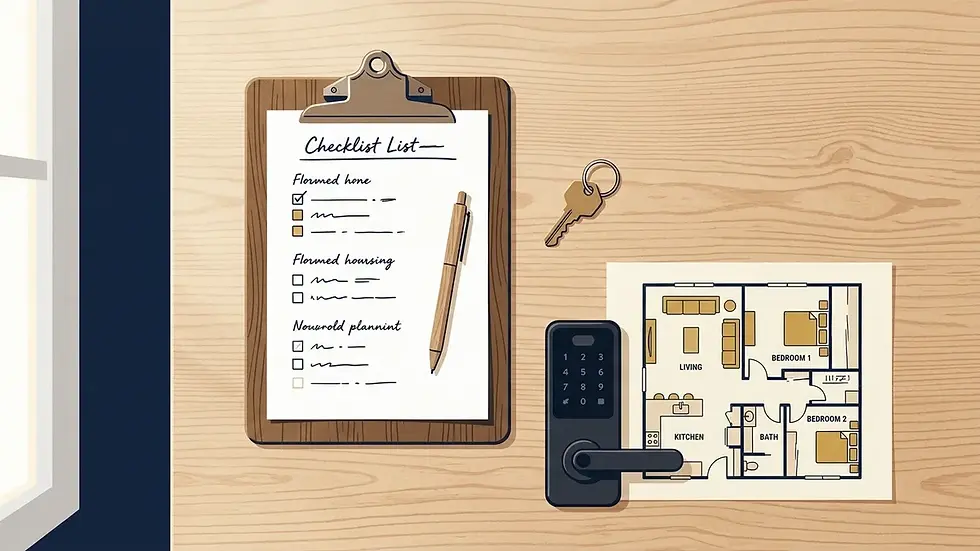
How Do I Prepare a Property for Short-Term Rental Management? (Onboarding Checklist)
Onboarding a property for short-term rental management is a multi-step process that sets the foundation for pricing accuracy, guest satisfaction, and platform search visibility. Skipping steps here creates problems that compound for months, so most experienced managers follow a structured sequence rather than launching a listing immediately.
Define your goals and budget. Decide whether you want full-service management or a lighter co-hosting arrangement, and set a realistic revenue target based on comparable properties in your submarket.
Research local regulations and permitting. Confirm zoning eligibility and any required short-term rental permit with your city or county before listing. Requirements and deadlines change periodically, so verify current rules with your local permitting office rather than relying on outdated information.
Secure appropriate insurance. Standard homeowner policies typically don't cover short-term rental activity; you'll usually need a dedicated STR policy or rider.
Invest in professional photography. Listings with high-quality images consistently outperform those with amateur photos in platform search rankings.
Set up multi-platform distribution. List across Airbnb, VRBO, and any relevant metasearch channels to maximize visibility.
Install smart home technology. Smart locks, noise monitors, and thermostats reduce operational friction and support remote check-in.
Establish cleaning and maintenance protocols. Standardized turnover checklists and a preventative maintenance schedule prevent small issues from becoming bad reviews.
Configure dynamic pricing. Load your property into a pricing tool and calibrate it against comparable listings and local event calendars before your first booking.
This sequence matters more for first-time hosts than any other group, since skipping the regulatory or insurance steps can create liability that's expensive to unwind later.
What Regulatory and Compliance Issues Should Owners Know About?
Regulatory compliance for short-term rentals covers zoning eligibility, permitting, tax collection and remittance, and insurance requirements, and these rules vary significantly by city and even by neighborhood within the same metro area. Nashville and Charleston both maintain specific short-term rental permitting processes, and requirements can change from year to year.
Because these rules shift periodically and vary by exact address, the single most important piece of advice here is this: verify current permit requirements, caps, and tax obligations directly with your city or county's official short-term rental office before you list a property. Do not rely on a blog post, including this one, as your final source of truth on current legal requirements.
Beyond permits, most jurisdictions require STR operators to collect and remit local occupancy or lodging taxes, often on top of state sales tax. Some platforms collect and remit certain taxes automatically; others leave that responsibility entirely with the host. Confirm which category your listing platform falls into so you don't end up under-remitting.
Insurance is the other piece owners underestimate. A standard homeowner or landlord policy typically excludes short-term rental activity, meaning a guest injury or property damage claim during a booked stay might not be covered without a dedicated STR endorsement or policy. This is a conversation worth having with your insurance agent before your first guest checks in, not after an incident.
What KPIs Should I Track for Short-Term Rental Profitability?
Key performance indicators for short-term rental profitability include RevPAR, average daily rate, occupancy percentage, net operating income, and guest satisfaction metrics like review ratings and response time. Tracking these consistently is how you separate a listing that's merely booked from one that's actually optimized.
RevPAR (revenue per available rental) is arguably the single most useful metric because it blends rate and occupancy into one number, making it easier to compare performance across different properties or time periods. A property with a high ADR but low occupancy might post a similar RevPAR to one with a lower rate but near-full occupancy, and that tells you something important about pricing strategy.
Beyond revenue metrics, operational KPIs matter too: cleaning turnaround time, maintenance response speed, and repeat or referral booking rate all signal how smoothly the operation runs day to day. A frameworks resource from Tidy outlines a similar structure for evaluating cleaning and maintenance performance alongside guest experience.
Review ratings deserve special attention because they directly affect search ranking on platforms like Airbnb. A dip below a certain star threshold can quietly tank booking volume even if pricing and photos haven't changed. Monitoring this monthly, not just reacting to a single bad review, is the difference between catching a trend early and losing months of bookings before noticing.
Full-Service Management vs. Co-Hosting: Which Fits Your Situation?
Full-service management and co-hosting differ primarily in how much control and day-to-day involvement the owner retains. Full-service management hands over nearly everything, pricing, guest communication, cleaning, maintenance, and compliance, in exchange for a higher percentage fee, typically at the upper end of the 20% to 40% range. Co-hosting keeps the owner more involved while still outsourcing the operational heavy lifting.
Co-hosting tends to fit out-of-state owners who want a trusted local presence without giving up full decision-making authority. It also suits owners who enjoy some hands-on involvement but need local support for guest emergencies, turnovers, or maintenance coordination they simply can't provide from another state.
Full-service management, by contrast, fits burned-out self-managers who've reached a breaking point with midnight guest messages and juggling multiple calendars, as well as multi-property investors who need centralized reporting and pricing across a growing portfolio. Our Charleston property management and Nashville Airbnb management services both operate on a full-service model with dedicated local teams, which is a meaningful difference from national brands that route owners through a rotating call center.
Neither model is universally "better." A single-property owner in Mount Pleasant who lives 20 minutes away might do fine with light co-hosting support. An out-of-state owner with a Nashville portfolio typically needs full-service oversight to avoid the anxiety of unmonitored issues.
Practical Guidance: How to Choose a Short-Term Rental Manager
Choosing a short-term rental manager comes down to matching services to your actual needs and verifying track record before signing a contract. Start by defining your own priorities: are you optimizing for hands-off convenience, maximum revenue, or a specific balance of both?
Common mistakes owners make when choosing a manager include:
Focusing only on the fee percentage without confirming what services are actually included in that percentage.
Skipping reference checks with current owner-clients who can speak to real performance, not just marketing claims.
Ignoring local market expertise in favor of a lower-cost national provider that treats every submarket the same way.
Not reviewing the contract's termination terms before signing, which can trap owners in underperforming arrangements.
Overlooking direct booking capability, which reduces long-term dependence on OTA platforms and their fees.
Before hiring anyone, ask for their average occupancy and RevPAR figures across their current portfolio, not just for one showcase property. A manager who can share performance data confidently is usually one who takes revenue management seriously rather than treating it as an afterthought. At Maverick STR, our revenue management clients across Nashville and Charleston consistently perform in the 90th percentile of their comp set, and we're comfortable sharing that data with prospective owners because it holds up.
Finally, ask about direct booking strategy. A manager who only relies on Airbnb and VRBO leaves you exposed to platform fee increases and algorithm changes outside your control. Our direct booking website builder and vacation rental SEO services exist specifically to reduce that dependence, and clients who adopt both have seen direct booking revenue increase by as much as 115%.

Frequently Asked Questions
What percentage do property managers take for short-term rentals?
Short-term rental property managers typically charge between 10% and 40% of gross revenue. Distribution-only services that handle marketing and listing placement sit closer to 10%, while full-service management covering pricing, guest communication, cleaning, and maintenance usually runs 20% to 40% at national brands.
What are the best property management systems for short-term rentals?
The best systems combine a channel manager for multi-platform distribution, a dynamic pricing tool like PriceLabs, and guest communication automation. Owners with 1 to 10 units often do fine with a lighter combination of these tools rather than a full enterprise property management system.
How much do I pay someone to manage my Airbnb?
Expect to pay 10% to 40% of gross booking revenue, depending on service scope. For context, a Nashville property earning the 2026 market average of $41.3K annually would pay roughly $10,325 per year at a 25% full-service rate, while a Charleston property averaging $59.2K would pay closer to $14,800.
What does a short-term rental property manager do?
A short-term rental property manager handles guest communication, dynamic pricing, listing optimization, cleaning coordination, maintenance response, compliance oversight, and financial reporting on the owner's behalf, functioning as the owner's operational and strategic partner.
Do I need a property manager if I only own one short-term rental?
Not necessarily. A single-property owner who lives nearby and enjoys hands-on involvement can self-manage successfully, especially with modern tools handling much of the messaging automation. But if pricing accuracy, time constraints, or local regulatory complexity feel overwhelming, even a single property can benefit from co-hosting support.
Is Nashville or Charleston a better market for short-term rental investment?
Both markets performed well through 2026, though differently. Charleston posted a higher average daily rate ($434) and occupancy rate (65%) with tightening supply, while Nashville offered a lower ADR ($353) but steady year-over-year revenue growth. The better fit depends on your budget, risk tolerance, and whether you prioritize a higher rate ceiling or broader inventory availability.
Can a direct booking website actually reduce my Airbnb and VRBO fees?
Yes. A well-built direct booking website paired with SEO and marketing can shift a meaningful share of repeat and referral guests away from OTA platforms, reducing the commission fees those platforms charge on every booking. Results vary by property and market, but owners who invest in this strategy alongside strong SEO have seen direct booking revenue climb substantially.
Conclusion: Making the Call on Professional Management
Property management for short term rentals in 2026 isn't a one-size-fits-all decision. Fee structures typically range from 10% to 40% of gross revenue, Nashville and Charleston each offer distinct performance profiles worth weighing carefully, and the right choice between full-service management, co-hosting, or self-management depends on your portfolio size, time availability, and revenue goals.
What's clear across the data is this: owners who track KPIs, price dynamically around local demand, and invest in direct booking infrastructure consistently outperform those who set it and forget it. That gap between passive and optimized management is exactly where a good manager earns their fee, and exactly where an owner who was projected to earn $60,000 ended up closing the year at $100,000 instead.

If you're weighing whether to keep self-managing or hand your Nashville or Charleston property to a dedicated local team, Maverick STR offers full-service management, co-hosting, and revenue management with clients consistently outperforming their market by 50% or more. Reach out for a portfolio review and see what your property could actually be earning.
Written by Chase Gillmore, Owner & Operator at Maverick STR
Content powered by inkSTR.co


Comments