

What Charleston Vacation Rental Owners Earn Per Month


Charleston vacation rental owners typically earn between $2,872 and $14,278 per month, depending on neighborhood, property size, and season, with the citywide median landing around $5,436 to $5,805 per month according to 2026 AirROI and AirDNA data. Downtown historic district and beach island properties earn the most, while inland suburban listings sit closer to the median. At Maverick STR, we track these numbers across our own Charleston, SC portfolio and see the same neighborhood spread play out month after month.
Key Takeaways
Charleston's average Airbnb listing earns roughly $58,300 to $67,000 annually, or about $4,540 to $5,800 per month, according to AirROI and AirDNA 2026 data.
Top 10% performing Charleston properties generate $14,278 or more per month, while median properties earn about $5,436, and the bottom 25% typically bring in $2,872 to $3,700 per month.
Neighborhood matters enormously: Sullivan's Island commands an average daily rate near $914, compared to $610 on Folly Beach, $326 in Mount Pleasant, and $252 on James Island.
Seasonality swings monthly revenue hard, with peak months (March through May) averaging around $8,594 to $10,169 per month versus $5,189 to $5,547 in low season (January, September, December).
Professional management is associated with revenue outperformance of 50% or more compared to self-managed listings, based on Maverick STR's own client portfolio data.
A signed rental agreement, occupancy tax registration, and Charleston's 2% local accommodations tax are baseline compliance costs that affect every owner's net monthly take-home, regardless of neighborhood.
If you own, or are considering buying, a short-term rental in Charleston, the question isn't just "what's the average" but "what does a property like mine, in my neighborhood, actually bring in." Generic citywide averages hide a lot. A one-bedroom condo in the historic district earns nothing like a six-bedroom beach house on Folly Beach, and both differ wildly from a Mount Pleasant single-family home rented to families visiting Patriots Point.
This guide breaks down real monthly earnings by neighborhood, performance tier, and season, using 2026 data from AirROI, AirDNA, and Crest & Cove market reports. We'll also cover what typically eats into gross revenue, from Charleston's accommodations tax to cleaning and management fees, so you can estimate net monthly income, not just headline numbers. As Charleston, SC property managers, the team at Maverick STR has watched owners consistently underestimate how much neighborhood selection and pricing strategy affect their bottom line.
How Much Does the Average Charleston Vacation Rental Owner Earn Per Month?
The average Charleston vacation rental owner earns approximately $4,540 to $5,800 per month in gross revenue, based on an annual average of $54,526 to $67,000 per listing reported by AirROI's 2026 dataset and AirDNA's Charleston, SC dashboard. This figure reflects citywide averages across all property types, from downtown condos to suburban homes, at an average occupancy rate near 57% to 65%.
Specifically, AirROI reports that the typical (median) Charleston listing generates around $5,758 per month, while AirDNA's trailing twelve-month figures through May 2026 show a 65% average occupancy rate at roughly $398 to $427 average daily rate. As a result, the math works out to somewhere between $59,200 and $67,000 in annual revenue for a well-positioned, actively managed listing.
These citywide averages, however, mask enormous variation. A downtown historic district property with strong amenities can double the median figure, while an entry-level suburban listing with weak photos and static pricing might fall well below it. Additionally, the gap between the top 10% of earners and the bottom 25% is one of the widest we track across any Southeastern market, which is precisely why neighborhood-level data matters more than the citywide number most articles lead with.
What Do Charleston Owners Earn by Performance Tier?
Charleston short-term rental owners fall into four clear performance tiers, ranging from under $3,700 per month at the bottom to over $14,278 per month at the top, according to 2026 AirROI market analysis. Understanding which tier your property lands in tells you more than any single citywide average.
Performance Tier | Monthly Revenue Range | Typical Occupancy | Typical Property Profile |
Top 10% | $14,278+ per month | 65-74% | Downtown historic district, South of Broad, beachfront on Sullivan's Island or Isle of Palms |
Top 25% | $9,888+ per month | 60-70% | Larger downtown properties, Folly Beach homes with ocean views |
Median | $5,436-$5,805 per month | 57-65% | Standard downtown condo, Mount Pleasant single-family home |
Bottom 25% | $2,872-$3,700 per month | 45-55% | Entry-level suburban listing, James Island, weaker photos or static pricing |
Notably, the gap between the top 10% and the bottom 25% is nearly five times in raw dollar terms. In our experience managing properties across Charleston, that spread almost never comes down to luck. It comes down to three levers: neighborhood, listing optimization, and whether the owner uses dynamic pricing or leaves rates flat year-round. A property stuck in the bottom quartile can often move up a full tier within two or three months of professional revenue management and listing cleanup, without any physical renovation.
How Much Do Downtown Charleston Rentals Earn Per Month?
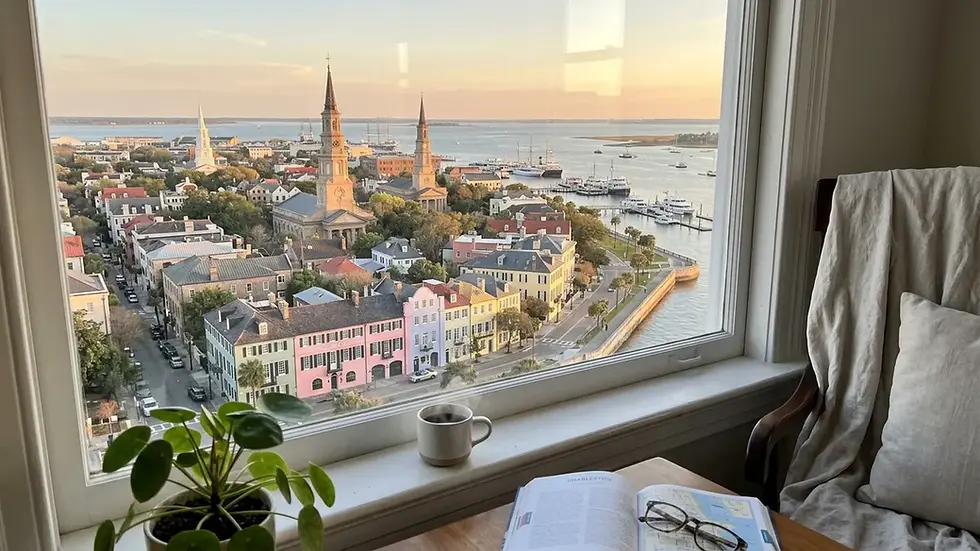
Downtown Charleston vacation rentals, including the historic district and South of Broad, typically earn $4,583 to $7,500 per month, with premium South of Broad properties exceeding $10,000 per month during peak season. This makes downtown the single strongest submarket in the entire Charleston, SC vacation rental economy.
According to GnG Vacation's neighborhood estimates, downtown Charleston properties generate $55,000 to $90,000 annually, while South of Broad luxury listings can clear $120,000 a year, or roughly $10,000 per month averaged across twelve months. The average daily rate for the city core sits near $427, per AirROI, though well-positioned South of Broad homes command considerably more.
What drives this premium? First, walkability to the King Street shopping corridor, the Battery, and Charleston City Market pulls guests willing to pay for convenience over space. Second, downtown's architectural inventory, single house floor plans, piazzas, and antebellum facades, photographs exceptionally well, which directly improves click-through rates on Airbnb and VRBO search results. Third, downtown carries the least seasonal volatility of any Charleston submarket because business travel, weddings, and college weekends fill gaps that pure leisure markets can't.
One trade-off worth naming honestly: downtown properties face the tightest short-term rental zoning restrictions in the city, and Charleston's local ordinance limits where new STR licenses can be issued within certain historic overlay districts. If you're evaluating a downtown acquisition, verify zoning eligibility before you factor in any of these revenue figures.
What Do Folly Beach and Sullivan's Island Rentals Earn Monthly?
Folly Beach and Sullivan's Island rentals earn among the highest average daily rates in the Charleston market, with Sullivan's Island averaging $914 per night and Folly Beach averaging $610, translating to roughly $4,167 to $11,000 per month depending on the specific property and season, per Crest & Cove's 2026 sub-market ADR data.
Folly Beach properties specifically average $50,000 to $75,000 in annual revenue, or about $4,167 to $6,250 per month, according to GnG Vacation estimates. Beach islands overall, including Isle of Parties and Folly, can reach $86,000 to $132,000+ annually for larger, well-located homes, which works out to $7,167 to $11,000 per month on average across the year. Sullivan's Island stands apart because inventory is genuinely scarce. Local zoning has kept short-term rental supply tight relative to demand, and that scarcity is exactly why its ADR outpaces every other submarket we track, including downtown. Folly Beach, by contrast, has more inventory and a more accessible price point, drawing families and larger groups rather than the higher-end weekend traveler Sullivan's Island attracts.
The trade-off on both islands is seasonality. Winter occupancy on beach properties drops sharply since the draw is sun and water, not year-round events like Charleston's downtown core enjoys. Owners we work with on Folly Beach and Johns Island typically see their strongest three to four months carry the majority of annual revenue, which makes shoulder-season pricing strategy critical rather than optional.
What Do Mount Pleasant and James Island Rentals Earn?
Mount Pleasant and James Island rentals earn the lowest average daily rates among major Charleston submarkets, at approximately $326 and $252 per night respectively, but they offer more stable, family-oriented demand and lower entry price points for new owners. Monthly revenue for these areas typically falls near or slightly below the citywide median.
Mount Pleasant, specifically, benefits from proximity to Patriots Point and easy access to both downtown Charleston and the beaches, without the premium pricing of oceanfront property. Single-family home long-term rents in Mount Pleasant average around $3,300 per month according to Palmetto State Properties' 2026 report, which gives owners a useful floor when comparing STR income against traditional leasing as a fallback strategy.
James Island, meanwhile, sits closer to downtown geographically but commands the lowest ADR of the submarkets tracked here. For owners, this typically means James Island properties need volume and consistent occupancy to compete with the per-night premiums downtown and beach properties enjoy. A well-managed James Island listing with strong reviews and responsive pricing can still land in the median performance tier, but it rarely reaches the top 10% earners without unusual amenities like a private pool or dedicated event space.
What Is the 75-55 Rule for Airbnb?
The 75-55 rule is an informal Airbnb hosting benchmark suggesting that a healthy short-term rental should maintain at least 75% guest satisfaction scores and around 55% occupancy to remain profitable and competitive in search rankings. It's not an official Airbnb policy, but a widely referenced rule of thumb among hosts and revenue managers.
In Charleston specifically, this benchmark tracks reasonably well against real data. AirDNA's 2026 figures show the citywide average occupancy sitting at 65%, comfortably above the 55% threshold, while median-tier properties in our own portfolio typically maintain review scores above the 75% satisfaction mark once professional cleaning and guest communication systems are in place. Where Charleston owners run into trouble is the bottom 25% performance tier, where occupancy can dip to 45% to 55%, right at or below the rule's floor. When occupancy falls under that range, Airbnb's search algorithm tends to deprioritize the listing further, creating a downward spiral that's difficult to reverse without intervention. This is one of the most common issues we see when auditing underperforming Charleston listings: an early dip in occupancy compounds because the algorithm punishes it, which further reduces bookings.
What Is the Richest Neighborhood in Charleston?
South of Broad, located at the southern tip of the Charleston peninsula below Broad Street, is widely regarded as Charleston's most affluent residential neighborhood, known for its antebellum mansions, cobblestone streets, and proximity to the Battery and White Point Garden. It also happens to be one of the strongest short-term rental submarkets in the city.
For vacation rental owners, South of Broad's affluence translates directly into rental premiums. As referenced earlier, luxury properties in this neighborhood can clear $120,000 annually, or roughly $10,000 per month, well above the downtown Charleston average of $4,583 to $7,500. The neighborhood's architectural pedigree, single houses with wraparound piazzas, historic ironwork, and walled gardens, commands rates that few other Charleston submarkets can match. That said, South of Broad also carries the most restrictive short-term rental zoning in the city, given its historic overlay designation. New owners should verify STR licensing eligibility with the City of Charleston before assuming any acquisition in this neighborhood can operate as a vacation rental at all.
Why Are People Moving Out of Charleston, SC?
Rising housing costs and increasing competition for STR-eligible inventory are among the most commonly cited reasons some residents and investors are relocating out of the Charleston metro, particularly as median long-term rents in the downtown core approach $4,395 per month according to 2026 metro rent data. For vacation rental owners, this trend actually cuts in a favorable direction. As long-term housing costs climb, more property owners are exploring short-term rental income as a way to offset carrying costs on properties they might otherwise sell. Submarkets like Summerville, which show single-family home rent growth around 8% to 10% year-over-year, are becoming attractive alternatives for buyers priced out of the downtown core, and several of those buyers are turning to vacation rental income once they close. The net effect for existing Charleston STR owners: demand for the city as a destination hasn't slowed, and rising local cost pressures are, if anything, pushing more capital into the short-term rental space rather than out of it.
What Is Considered Upper Class in Charleston, SC?
Upper-class status in Charleston is generally associated with residence in historically affluent neighborhoods such as South of Broad, Sullivan's Island, and parts of Mount Pleasant, along with property values well above the metro median of roughly $2,600 per month in long-term rent equivalents. For context, Sullivan's Island single-family home rents range from about $8,500 to $12,000 or more per month, reflecting the premium beachfront segment discussed earlier in this guide. For vacation rental investors, this matters less as a social marker and more as a practical signal: neighborhoods associated with higher long-term property values tend to correlate directly with higher short-term rental average daily rates. Sullivan's Island's $914 ADR and South of Broad's $10,000 monthly averages aren't coincidental, they reflect the same underlying property values and buyer demand that define these areas as Charleston's most affluent.
What Expenses Cut Into a Charleston Owner's Monthly Revenue?
Charleston vacation rental owners typically lose 25% to 45% of gross monthly revenue to operating expenses, including property management fees, cleaning, utilities, and local taxes. Understanding these deductions is essential to translating the gross figures cited throughout this guide into realistic net income.
Expense Category | Typical Range | Notes |
Full-service management fee | 15-30% of gross revenue | Covers booking, guest communication, cleaning oversight |
Cleaning and turnover | Varies by property size | Often billed per stay, passed to guest as a fee |
Utilities, HOA, and maintenance | 10-20% of gross revenue | Combined budget line for most professional operators |
Local accommodations tax | 2% (city) plus state and county | Collected from guests, remitted monthly by host |
Insurance (transient lodging) | Higher than standard homeowner policy | Required due to STR classification as transient accommodation |
Specifically, Charleston requires short-term rental owners to register with the city and obtain a local occupancy tax certificate. STRs are subject to a 2% local accommodations tax on top of state and regional lodging taxes, which owners must collect from guests and remit monthly. Additionally, zoning and neighborhood ordinances can restrict where STRs are permitted, which is why we mentioned South of Broad and downtown zoning caveats above. Full-service vacation rental management fees in Charleston typically start around 10% of monthly revenue and rise depending on property type and the scope of services included, according to industry benchmarks. Owners self-managing a property save that fee but take on all guest communication, cleaner scheduling, and pricing strategy themselves, which is exactly where we see burned-out self-managers eventually reach out to a management company for relief.
How Does Charleston STR Income Compare to Long-Term Rentals?
Charleston short-term rentals generally outearn long-term leases on a gross monthly basis, but the gap narrows once occupancy dips and expenses are factored in. A median Charleston STR earning $5,436 to $5,805 per month compares to a typical 3-bedroom long-term rental at roughly $3,300 to $4,030 per month in strong submarkets like Mount Pleasant. The advantage for STR owners comes from flexibility and rate control. A long-term lease locks in the same rent for twelve months regardless of demand, while a short-term rental captures peak pricing during March through May, when Charleston's tourism season is strongest, per AirROI's seasonal data. Conversely, STR owners absorb far more operational overhead, guest turnover, cleaning coordination, and platform fees that a long-term landlord never touches. For owners weighing the decision, the honest answer is that STR income only outperforms long-term leasing when occupancy stays reasonably high and management is handled efficiently. A poorly managed STR sitting at 45% occupancy can actually underperform a comparable long-term rental once cleaning costs and vacancy are factored in.

What Should Charleston Owners Do to Increase Monthly Earnings?
Charleston vacation rental owners can most effectively increase monthly earnings by adjusting to seasonal demand with dynamic pricing, optimizing listing photos and descriptions for search visibility, and considering professional management once self-managing starts eating into occupancy or review scores. These three levers explain most of the gap between bottom-tier and top-tier performers cited earlier in this guide. Practical steps worth prioritizing:
Audit your pricing calendar against Charleston's seasonal curve. Peak months (March through May) should carry meaningfully higher rates than low season (January, September, December), where revenue can drop by roughly half.
Compare your listing's photos and amenities against your specific submarket's top performers. A downtown listing competing against South of Broad properties needs to lean into architectural character; a Folly Beach listing should foreground ocean access and outdoor space.
Track your occupancy against the 75-55 benchmark discussed above. If you're consistently below 55% occupancy, something in pricing, photos, or review response time needs attention before the algorithm penalty compounds further.
Confirm your local compliance is current. A lapsed occupancy tax certificate or an expired STR license can result in a delisting that erases months of review history and search ranking.
Weigh the cost of self-management against lost occupancy. If gap nights or slow guest response times are costing you more than a management fee would, that's a signal worth acting on.
One of our owners came to us with a Folly Beach property projected to earn $60,000 in its first year under self-management. After we took over pricing strategy, listing optimization, and guest communication, that same property closed the year at $100,000, without any physical renovation to the home itself. That gap, nearly $40,000, came almost entirely from better seasonal pricing and reduced vacancy during shoulder months. It's the kind of result that illustrates why the top 10% and bottom 25% performance tiers we outlined earlier can represent the same physical property under different management approaches.
How Do I Know If My Charleston Property Is Underperforming?
A Charleston vacation rental is likely underperforming if its monthly revenue falls below $3,700 for its property type and neighborhood, or if occupancy sits under 55% outside of the seasonal low months of January, September, and December. Comparing your specific numbers against the neighborhood benchmarks in this guide is the fastest way to check. Specifically, if you own a downtown Charleston property earning less than $4,583 per month, or a Mount Pleasant home earning less than roughly $3,300, you're likely below what comparable properties in your submarket achieve. Additionally, if your review scores have started slipping or your calendar shows scattered one- and two-night gaps between longer bookings, that's often a pricing and minimum-stay configuration problem rather than a demand problem. From what we see across the properties Maverick STR manages in Charleston, the most common root cause of underperformance isn't the property itself, it's static pricing that never adjusts for CHStrolla festival weekends, spring garden tours, or off-season lulls. A full-service property management approach with active dynamic pricing typically closes most of that gap within the first two to three months.
Should I Hire a Property Manager or Self-Manage My Charleston Rental?
Hiring a property manager makes sense for Charleston owners once self-managing starts costing more in lost occupancy, guest response delays, or personal time than the management fee itself would cost, typically once an owner has more than one property or lives outside the local market. Self-managing can work well for a single, easy-access property with an owner who has time to handle guest messages daily. Professional management in Charleston is associated with revenue outperformance of 50% or more compared to self-managed listings, based on data from Maverick STR's own client portfolio. That gap typically comes from three sources: active dynamic pricing that adjusts around local demand, listing optimization that improves search placement, and faster guest response times that protect review scores. If you're an out-of-state owner or juggling multiple Charleston properties, co-hosting or full-service management removes the daily operational burden while keeping you informed through transparent reporting. If you're a hands-on owner with one property and genuinely enjoy the guest interaction, self-management can still work, provided you're disciplined about seasonal pricing.
Frequently Asked Questions
How much do Charleston vacation rental owners make per month on average?
Charleston vacation rental owners earn approximately $4,540 to $5,800 per month on average, based on 2026 AirROI and AirDNA data, though top-performing properties in South of Broad or Sullivan's Island can exceed $10,000 to $14,278 per month.
Which Charleston neighborhood earns the most for vacation rental owners?
South of Broad and downtown Charleston's historic district earn the most, with luxury properties clearing $10,000 per month and standard downtown listings averaging $4,583 to $7,500 monthly. Sullivan's Island commands the highest average daily rate at $914 per night.
How much does Charleston short-term rental management cost?
Full-service vacation rental management fees in Charleston typically start around 10% of monthly revenue and range up to 30%, depending on the scope of services, property type, and local market benchmarks for full guest and cleaning oversight.
Is Folly Beach or Sullivan's Island better for rental income?
Sullivan's Island commands a higher average daily rate ($914 versus $610 on Folly Beach) due to tighter inventory and premium positioning, but Folly Beach offers more accessible entry pricing and consistent family demand, making both strong options depending on your investment budget.
What taxes do Charleston vacation rental owners need to collect?
Charleston requires short-term rental owners to register with the city, obtain a local occupancy tax certificate, and collect a 2% local accommodations tax on top of state and regional lodging taxes, remitted monthly to the appropriate authorities.
Does professional management really increase Charleston rental revenue?
Yes. Professional management is associated with revenue outperformance of 50% or more compared to self-managed listings, based on Maverick STR's client portfolio data, primarily through active dynamic pricing, listing optimization, and faster guest response times.
How seasonal is Charleston's vacation rental income?
Charleston's STR income swings significantly by season, with peak months (March through May) averaging $8,594 to $10,169 per month compared to $5,189 to $5,547 during low season (January, September, December), according to AirROI's 2026 seasonal breakdown.
Conclusion: Know Your Neighborhood Numbers Before You Set Expectations
What Charleston vacation rental owners earn per month depends far more on neighborhood, season, and management approach than most citywide averages let on. The spread between a bottom-tier James Island listing earning under $3,700 monthly and a top-tier South of Broad property clearing $14,278 or more isn't random, it reflects real differences in location, pricing discipline, and management quality. As 2026 data from AirROI, AirDNA, and Crest & Cove consistently shows, Charleston's short-term rental market rewards owners who treat pricing and positioning as active, ongoing work rather than a set-it-and-forget-it listing. If you're evaluating your own property's performance against these benchmarks, the honest next step is comparing your actual monthly numbers, not just gross revenue, but net income after management, cleaning, and tax obligations, against the neighborhood tier your property realistically fits into.

If your Charleston property feels stuck below where it should be, or you're simply tired of manually adjusting rates around every festival and shoulder season, Maverick STR handles revenue management, listing optimization, and full-service operations for owners across Charleston, SC, with results that consistently outperform market averages by 50% or more. Reach out for a free portfolio review to see where your property's monthly earnings could realistically land.
Written by Chase Gillmore, Owner & Operator at Maverick STR
Content powered by inkSTR.co


Comments