

Get Direct Bookings for Your Vacation Rental Without Airbnb Fees

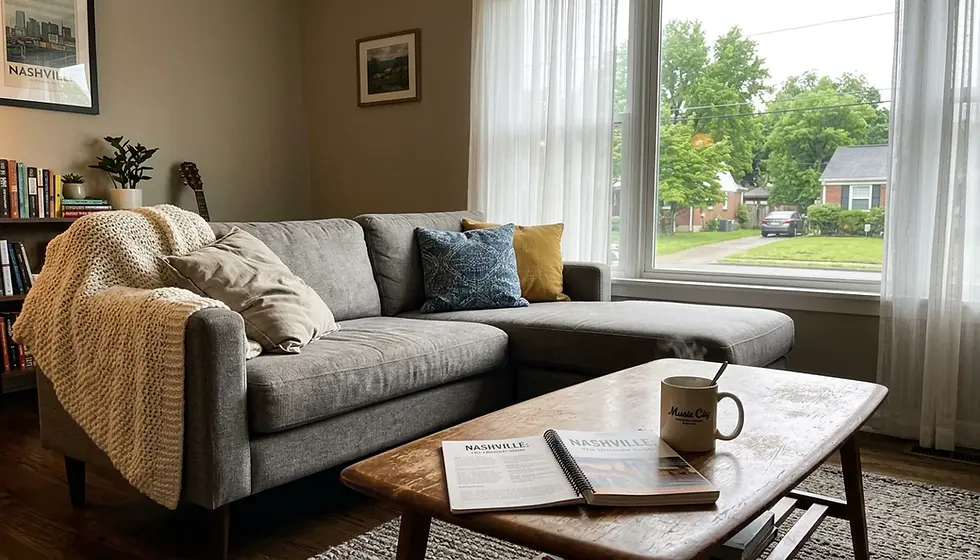
The best strategies to get direct bookings for a vacation rental without paying Airbnb fees are building a branded booking website, using Airbnb and VRBO as discovery tools rather than long-term booking homes, and converting past guests into repeat direct bookers through email and loyalty incentives. At Maverick STR, we build these systems daily for Nashville and Charleston owners, and the pattern holds nationwide.
Key Takeaways
A branded direct booking website with a real-time booking engine is the foundation; without one, every guest defaults back to Airbnb or VRBO regardless of how good your marketing is.
Nashville short-term rentals average $40,900 per year per listing with a $349 average daily rate across 13,898 active listings as of June 2026, according to AirDNA, which means even a small shift to direct bookings recovers real dollars.
Offering a 5 to 10 percent discount on your own site (instead of matching OTA pricing exactly) still nets you more than an Airbnb booking once you account for host service fees.
Email capture at every stay, paired with a post-checkout follow-up offering a discount code, is the single highest-converting tactic competitors and top guides consistently cite for turning one-time OTA guests into repeat direct bookers.
Listing your property on Google Vacation Rentals and claiming a Google Business Profile puts you in front of travelers who are actively searching for a place to stay in your city, not just scrolling Airbnb.
Legal boundaries matter: Airbnb and VRBO both restrict how you can direct guests off-platform during an active reservation, so timing your ask matters as much as the offer itself.
If you manage even one short-term rental, you already know the arithmetic. Airbnb charges host service fees on every booking, and once you add in cleaning fee markups and the platform's grip on your guest relationship, a meaningful share of your annual revenue disappears before it ever hits your account. In 2026, with Nashville's short-term rental market alone generating an estimated $540 million in annual revenue across the metro area, owners who never build a direct channel are leaving real money on the table year after year.
This guide breaks down the specific, actionable strategies that work right now, not generic marketing platitudes. We'll cover the website infrastructure you need, the discount math that actually makes direct rates attractive, how to legally and ethically move guests off Airbnb, and the exact follow-up sequences that turn a one-time guest into someone who books with you directly every single time they visit. From our vantage point managing properties across Nashville and Charleston, the owners who succeed at this treat it as a system, not a slogan.
What Are the Best Strategies to Get Direct Bookings for a Vacation Rental Without Paying Airbnb Fees?
The best strategies to get direct bookings for a vacation rental without paying Airbnb fees combine a professional booking website, incentive-based pricing, email retention, and local search visibility. Specifically, these four pillars work together: a booking engine that processes payment without a middleman, a rate structure that rewards direct guests, a database of past guests you can market to directly, and enough local SEO presence that new travelers find you before they ever open Airbnb.
No single tactic replaces the others. A website with zero traffic does nothing. A discount with no website to redeem it on does nothing. As a result, the owners who actually reduce their OTA dependency treat this as a coordinated funnel: attract, convert, retain. We walk full-service Maverick STR clients through this exact sequence when we build out their direct booking website and marketing plan, and it's the same sequence independent owners can build piece by piece.

How to Book Directly Without Airbnb?
Booking directly without Airbnb requires a standalone website with a live booking engine, secure payment processing, and real-time calendar sync with your other listing channels. Guests need to see actual availability and pay on the spot, the same experience Airbnb offers, minus the middleman.
Start with a platform built specifically for short-term rentals rather than a generic template builder. Tools referenced in the industry, including Hostaway, Hostfully, and Lodgify, all offer booking engines that plug into a custom site and sync your calendar across Airbnb, VRBO, and your own domain so you never risk a double booking. Your site needs, at minimum: high-resolution photos, a clear nightly rate calendar, guest reviews (imported from Airbnb and Google where possible), a written cancellation policy, and a one-click path to pay.
Second, your booking flow has to work on a phone. Mobile devices account for the majority of website visits across the internet as of 2026, per StatCounter's global platform market share data, and vacation rental searches skew even more mobile-heavy since travelers often browse while already planning a trip on the go. A site that requires pinching and zooming to book loses guests before they ever reach checkout.
Finally, list your property on Google Vacation Rentals in addition to your own site. This free listing channel surfaces your direct booking link inside Google's own travel search results, putting you next to Airbnb and VRBO listings without paying either platform a commission. We build this into every vacation rental SEO engagement because it's one of the few genuinely free discovery channels left.
How to Avoid Paying Airbnb Fees?
Avoiding Airbnb fees means routing repeat and referred guests to a direct booking channel where you control payment processing and pricing, rather than accepting every booking through the Airbnb platform. You cannot eliminate Airbnb fees on bookings that originate and complete inside the app, but you can systematically reduce how many bookings happen that way over time.
The realistic path is a gradual shift, not an overnight switch. First-time guests almost always find you through Airbnb, VRBO, or a metasearch site like Trivago, and that's fine. Airbnb and VRBO are excellent, low-cost discovery engines. Second, once a guest has stayed with you, they've experienced your property, trusted your communication, and are far more likely to book directly next time if you make that path easy and worthwhile.
Practically, this looks like: leaving a physical welcome card with your direct site URL and a discount code, embedding that same offer into your digital guidebook, and following up by email within a week of checkout. Guests who booked once through Airbnb rebook direct at meaningfully higher rates than first-timers because trust is already established. This is also where a co-hosting partner or management team pays for itself: someone has to run this retention system consistently, and most self-managed owners simply don't have the bandwidth after handling turnovers and guest messages.

What Is the 75/55 Rule in Airbnb?
The 75/55 rule refers to a rough industry heuristic some hosts use when comparing OTA pricing to direct pricing: keeping your direct rate around 5 to 10 percent below your Airbnb-listed rate while still netting more revenue once host service fees are removed from the equation. It is not an official Airbnb policy, but a pricing framework independent hosts have adopted informally.
Here's the logic. Say your Airbnb nightly rate is $300. After the guest-side and host-side service fees factored into that listing, your net take-home might land closer to $270 to $285 depending on your specific fee structure. If you offer that same night directly for $280, the guest pays less than they would on Airbnb, and you still net more than you would through the platform. Everyone wins except the OTA.
The discount doesn't need to be dramatic to work. Several industry guides, including PriceLabs' direct booking research, note that a 5 to 10 percent reduction is usually enough to make the direct price feel like a genuine deal without you leaving money on the table. Undercutting too aggressively trains guests to always wait for a discount, which erodes your pricing power over time. We handle this exact balancing act inside revenue management engagements, where the goal is maximizing net revenue across every channel, not just filling the calendar.
What Is the 80/20 Rule for Airbnb?
The 80/20 rule as applied to short-term rentals suggests that roughly 80 percent of your repeat revenue tends to come from about 20 percent of your guest base, the travelers who loved their stay enough to come back or refer friends. This is a variation of the classic Pareto principle applied to hospitality, not an Airbnb-published statistic.
In practice, this means your retention efforts should focus disproportionately on your best guests, not your entire guest list equally. A family that stayed at a property like Underwood Manor for a long weekend and left a five-star review with specific praise is a far better retention target than a one-night business traveler who left no feedback at all.
Identify these high-value guests by tracking who leaves detailed reviews, who books multi-night stays, and who asks questions that suggest they're planning a return trip (asking about seasonal rates, nearby events, or bringing a larger group next time). Segment your email list so these guests get first access to your best direct booking discounts and early access to new dates. Generic blast emails to everyone convert worse than targeted offers to your actual repeat-guest segment.
How Do You Build a Direct Booking Website That Actually Converts?
A converting direct booking website needs five non-negotiable elements: a live booking calendar with instant pricing, secure payment processing, imported guest reviews, mobile-first design, and a clear value proposition explaining why booking direct beats booking through Airbnb. Missing any one of these tends to tank conversion rates even with strong traffic.
Start with the booking engine itself. Platforms like Lodgify integrate directly into a custom-built site and handle real-time availability, deposit collection, and calendar syncing across channels so you never overbook. If you're not ready for a full custom build, embedding a booking widget onto an existing WordPress or Squarespace site is a reasonable interim step, though it typically converts at a lower rate than a purpose-built booking flow.
Second, match or beat your Airbnb cancellation policy on your direct site. Guests who are used to Airbnb's Flexible or Moderate policies will hesitate to book direct if your site's terms feel stricter or vaguer. Third, display real guest reviews prominently, either imported from Airbnb and Google or collected fresh through your own post-stay survey. Fourth, build the entire experience mobile-first since most travel research and booking happens on a phone. Fifth, state your value proposition directly on the homepage: no service fees, a small direct-booking discount, or perks like early check-in that OTAs don't guarantee.
This is precisely the kind of build our team handles through Maverick STR's direct booking website builder, and it's also the foundation of the broader vacation rental marketing strategy we run for full-service clients. We've seen clients achieve a 115 percent increase in direct booking revenue once the site, SEO, and retention email sequence were all working together rather than as disconnected pieces.

What Legal Boundaries Should You Know Before Directing Guests Off Airbnb?
Airbnb and VRBO both restrict hosts from soliciting off-platform bookings or sharing outside contact information during an active reservation inquiry or booking, and violating these terms can trigger listing penalties or removal. Understanding the difference between marketing to past guests after checkout versus soliciting current guests mid-stay is the line most owners cross without realizing it.
Specifically, Airbnb's terms of service prohibit hosts from directing guests to book outside the platform while a reservation is active or being negotiated through Airbnb messaging. This means you should never mention your website URL or a discount code in Airbnb's in-app messaging thread before or during a stay. As a result, the safe and compliant approach is to wait until after checkout, when the guest relationship is no longer governed by that specific in-app restriction, before extending a direct-booking invitation.
Practically, this looks like: a physical welcome card left in the unit (not sent through Airbnb messaging), a printed insert in your digital guidebook, or a post-checkout email sent from your own guest database once the reservation has closed. Because none of these channels route through Airbnb's messaging system, they fall outside the specific in-platform solicitation restriction. Always review the current terms of service for both Airbnb and VRBO directly, since platform policies are updated periodically and specific enforcement details can change. This is a compliance question worth revisiting with your co-hosting or management partner at least once a year.
How Do You Turn OTA Guests Into Repeat Direct Bookers?
Turning OTA guests into repeat direct bookers requires capturing their contact information at the property, then following up after checkout with a concrete, time-sensitive incentive to book directly next time. The conversion window is highest in the first two weeks after a positive stay, while the experience is still fresh.
First, capture the email. This happens through a Wi-Fi login splash page (tools like Stayfi specialize in exactly this), a printed welcome card with a QR code, or a digital guidebook that requires a name and email to unlock local recommendations. Second, send a genuine post-checkout thank-you email within three to five days, not an obvious sales pitch. Ask how the stay went, and near the bottom, mention that returning guests get a discount when booking directly through your site.
Third, build a simple loyalty structure. A 10 percent discount on the next stay, a free night after three bookings, or a referral bonus in the $50 to $100 range for both the referring guest and the new guest are all common structures that top direct-booking guides recommend. Fourth, segment your list. Guests who left five-star reviews or asked about return visits deserve a more personal, higher-value offer than a generic mass email.
Retention Tactic | Timing | Typical Offer |
Post-checkout email | 3 to 5 days after checkout | Thank-you note plus mention of direct rate discount |
Loyalty discount | Ongoing, tied to guest database | 5 to 10 percent off next direct booking |
Referral bonus | Triggered by a new booking | $50 to $100 credit for both parties |
Repeat guest perk | Applied at check-in for returning guests | Free early check-in or late checkout |
Email platforms like Mailchimp or Constant Contact make this manageable even for a single-property owner. We've written a full breakdown of this exact sequence in our guide on how email marketing boosts direct bookings, which pairs well with the strategies in this article.
How Do You Onboard a Seasonal or Investor-Owned Property Into a Direct Booking System Without a Full-Time Host?
Onboarding an investor-owned or seasonal property into a direct booking system without a full-time host on-site requires automating the guest touchpoints that would otherwise depend on manual attention: check-in instructions, review requests, and post-stay follow-up emails. This is exactly the gap that co-hosting and full-service management fill for out-of-state owners.
Specifically, a seasonal Charleston beach property or a Nashville investment condo rarely has an owner physically present to hand out welcome cards or answer guest questions in real time. Automated guest messaging tools, smart lock codes tied to a booking system, and templated email sequences replace the in-person touch. For example, a check-in message can auto-send 24 hours before arrival with the direct booking discount code embedded for their next visit, without anyone lifting a finger.
Second, the property still needs someone reviewing performance data and adjusting the retention strategy quarterly, since automation without oversight tends to go stale. This is where co-hosting arrangements work well: the co-host handles the local, in-person side (cleaning coordination, maintenance, guest issues) while the direct booking marketing runs on autopilot in the background. Across the properties Maverick STR manages, including seasonal group homes like Fern Unit A and Fern Unit B in Nashville, this hybrid model lets investor-owners in other states maintain a real direct booking channel without hiring in-house staff.
How Should You Structure a Cold Traffic Funnel for Direct Bookings Without Airbnb Visibility?
A cold traffic funnel for direct bookings without relying on Airbnb visibility runs new visitors from a paid ad or search result directly to a landing page built for one property or one destination, then captures their email even if they don't book immediately. This differs fundamentally from OTA discovery because you're paying for the click yourself and need it to convert or at least capture contact information.
First, build a dedicated landing page for the specific search intent, such as "pet-friendly cabin near downtown Nashville," rather than sending cold traffic to your generic homepage. Second, run targeted paid ads through Google Ads or Google Hotel Ads, which lets you compete directly for travelers actively comparing accommodation options in your destination. Google Hotel Ads specifically targets people already in booking mode, which tends to convert better than generic display advertising.
Third, if the visitor doesn't book on the first visit, retarget them with a Facebook or Google remarketing ad within the following week, reminding them of the property and reinforcing the direct-booking discount. Fourth, capture email even from non-converters through an exit-intent popup offering a small incentive, like a downloadable local guide, in exchange for their contact information. This turns an otherwise lost visitor into a future retargeting opportunity. Building this kind of funnel from scratch is genuinely time-intensive, which is why it sits squarely inside the paid advertising and marketing work we do for clients who want SEO and paid channels working in tandem rather than competing for budget.
What Discounts and Incentives Actually Get Guests to Book Direct?
Effective direct booking incentives include a modest rate discount, flexible perks like early check-in or free parking, and loyalty structures that reward repeat business, rather than aggressive across-the-board price cuts that undercut your own revenue. The goal is making the direct channel feel like the smarter choice, not a fire sale.
Specifically, a 5 to 10 percent discount off your OTA-listed rate is the most commonly cited range across direct-booking guides, since it's enough to feel meaningful to the guest while still netting you more than an OTA booking would after fees. Beyond pure price, non-monetary perks often convert just as well: free early check-in, a stocked welcome basket, complimentary late checkout, or waived cleaning fees for multi-night stays.
Seasonal and last-minute incentives round out the toolkit. Early-bird discounts for guests booking three or more months out reward planners, while last-minute deals fill gap nights that would otherwise sit empty. Weekly and monthly discount rates capture longer-term stays that rarely happen through Airbnb's typical booking patterns. According to AirDNA's Nashville data, best-in-class properties in the top 10 percent of the market achieve occupancy well above the roughly 44.2 percent citywide average recorded in 2026, and a strong direct-booking incentive structure is one of the levers separating those top performers from the median.
How Do You Optimize Local SEO and Google Business Profile for Direct Bookings?
Optimizing local SEO for direct bookings means claiming and fully building out a Google Business Profile under the vacation rental category, while targeting long-tail search phrases specific to your property type and location. This channel is genuinely free and captures travelers who are searching Google before they ever open Airbnb.
First, claim your Google Business Profile and select the vacation rental home category, filling in photos, your direct website link, contact details, and accumulated reviews. Second, target specific local search phrases rather than generic ones. "Bachelorette party house near downtown Nashville" will convert better than "Nashville vacation rental" because it matches exactly what a specific traveler segment is typing into Google.
Third, build supporting blog content around local events, neighborhoods, and guest questions. This is precisely the strategy behind our SEO for vacation rentals guide, and it's an area where property management companies without in-house marketing consistently fall behind. Fourth, use free tools like Keyword.io or Ubersuggest to identify what travelers in your specific market are actually searching for before you write a single page. Clients who commit to this consistently see meaningfully higher organic traffic within the first few months; our own SEO clients have seen 3 to 5 times their monthly organic traffic in the first 3 months of a coordinated content push.
Data and Evidence: Nashville Direct Booking Opportunity
Nashville's short-term rental market represents a substantial direct-booking opportunity because of its scale: 13,898 active listings generating an average of $40,900 per year each, according to AirDNA's June 2026 data. Even shifting 15 to 20 percent of your annual bookings to a direct channel meaningfully changes your net revenue once OTA fees are removed from the equation.
Metric | Nashville, TN Value (2026) | Source |
Active STR listings | 13,898 | AirDNA |
Average annual revenue per listing | $40,900 | AirDNA |
Average daily rate | $349 | AirDNA |
Average occupancy (citywide) | 44.2 percent | AirROI |
Top 10 percent occupancy | 79 percent or higher | AirROI |
Total metro STR revenue | Approximately $540 million | Metro Nashville Tourism and Convention Commission |
What this table tells you is simple: the gap between median and top-performing properties in Nashville is enormous, and direct booking capability is one of the differentiators. A property earning near the median $40,900 has substantial room to grow just by capturing repeat guests directly instead of paying Airbnb on every single transaction. From our experience managing properties across Nashville, the owners who close that gap are almost always the ones treating direct bookings as infrastructure, not an afterthought.
Practical Guidance: Common Mistakes to Avoid
The most common mistake owners make when pursuing direct bookings is building a website and then doing nothing to drive traffic to it, assuming the site alone will generate bookings. A website with no SEO, no email list, and no paid traffic strategy behind it functions as a digital brochure, not a booking engine.
Don't set your direct rate identical to your Airbnb rate. Guests need a reason to book direct; parity pricing removes the incentive entirely.
Don't message guests about your direct site inside Airbnb's platform during an active booking. This risks a terms of service violation. Wait until after checkout.
Don't skip mobile optimization. If your booking flow is clunky on a phone, you'll lose the majority of your traffic before they reach checkout.
Don't neglect the follow-up email. Capturing an email address and never using it wastes the single highest-converting retention channel available.
Don't discount so deeply that you erode your margins. A 5 to 10 percent direct discount is typically the sweet spot; anything steeper trains guests to wait for deals.
Don't ignore Google Vacation Rentals. It's a free listing channel most owners never claim, leaving visibility on the table.
If this list feels like a lot to manage on top of turnovers, guest messages, and maintenance calls, that's a fair reaction. It's also exactly why full-service property management exists. Our team handles the entire retention and direct-booking marketing system so owners don't have to build it themselves from scratch.
Frequently Asked Questions
How much does it cost to build a direct booking website for a vacation rental?
Costs vary widely depending on whether you use a template builder, a specialized platform like Lodgify or Hostfully, or a fully custom build. A template-based site with a booking widget can be a low-cost starting point, while a custom-built, SEO-optimized site with ongoing marketing support represents a larger investment that typically pays for itself once organic traffic and repeat bookings scale.
Can I really avoid all Airbnb fees by getting direct bookings?
You can never fully eliminate Airbnb fees on bookings that originate and complete inside the Airbnb app, but you can steadily reduce your overall exposure to those fees by converting a growing share of repeat and referred guests to your own direct booking channel over time.
Is it against Airbnb's rules to ask guests to book directly next time?
Airbnb restricts hosts from soliciting off-platform bookings while a reservation is active or being negotiated through Airbnb's own messaging system. Reaching out after checkout, through your own email list or a physical welcome card, generally falls outside that specific in-app restriction, but you should review Airbnb's current terms of service directly since policies are periodically updated.
What is the easiest first step for a first-time host wanting direct bookings?
Start by claiming a free Google Business Profile under the vacation rental category and collecting guest emails at every stay, even before you build a full website. Both are free or low-cost and start building the audience and visibility you'll need once your direct booking site is live.
Do direct booking discounts actually cost me money compared to Airbnb?
No, when structured correctly. A 5 to 10 percent discount off your Airbnb-listed rate usually still nets you more revenue than the same booking through Airbnb, once you account for the host service fees Airbnb charges on every transaction.
How long does it take to see results from vacation rental SEO for direct bookings?
Most owners begin seeing measurable organic traffic growth within the first three months of consistent SEO work, though meaningful booking volume typically builds over six to twelve months as your site accumulates authority, reviews, and indexed content.
Should I use a property management company to handle direct bookings, or do it myself?
Solo owners with one property and time to spare can absolutely run this system themselves, but multi-property owners or out-of-state investors often find the ongoing SEO, email marketing, and retention work outpaces what they can manage alongside daily operations, which is where co-hosting or full-service management fills the gap.
Conclusion
Getting direct bookings for a vacation rental without paying Airbnb fees comes down to building the infrastructure once and then running it consistently: a mobile-friendly booking website, a modest direct-rate discount, an email retention sequence, and local SEO visibility through channels like Google Vacation Rentals. None of these tactics work in isolation, but stacked together, they steadily shift your revenue mix away from OTA commissions.
Nashville's market alone shows the scale of the opportunity, with 13,898 active listings and an average of $40,900 in annual revenue each as of 2026. Owners who build a real direct channel capture a growing share of that revenue without giving Airbnb a cut every time. The strategies covered here, from post-checkout email sequences to compliant off-platform marketing, give you a working framework whether you manage one property or a growing portfolio.

If building and running this entire system feels like more than you have time for on top of guest turnovers and maintenance calls, that's the exact gap Maverick STR fills. Our revenue management clients consistently outperform their market by 50 percent or more, and one property we took on projected to earn $60,000 in its first year ended up generating $100,000 instead once pricing, marketing, and direct booking systems were aligned. Get started with Maverick STR to see what a coordinated direct booking and management strategy could do for your property in Nashville, Charleston, or nationwide for digital-only services.
Written by Chase Gillmore, Owner & Operator at Maverick STR
Content powered by inkSTR.co

Comments