

Airbnb Regulations Charleston: Owner's 2026 Compliance Guide

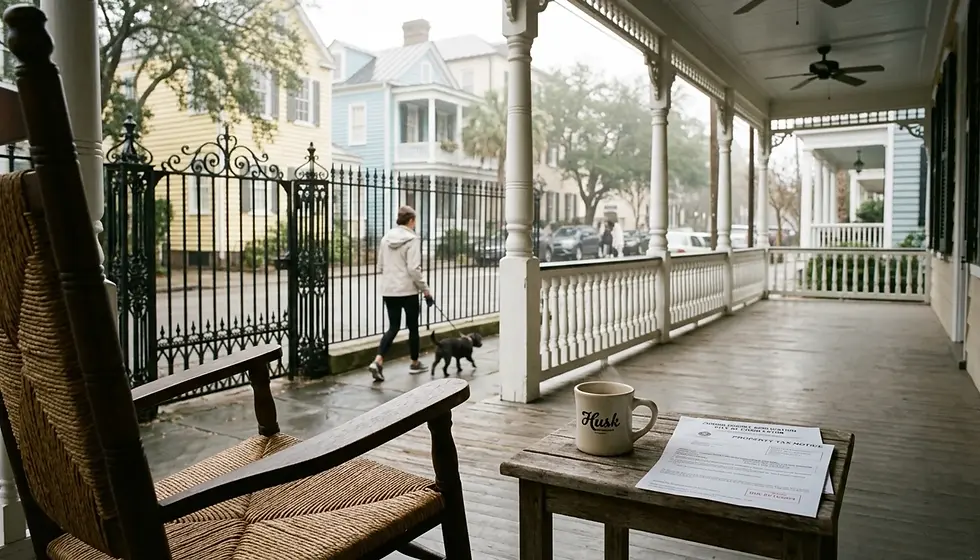
Airbnb regulations in Charleston require most short-term rental hosts to live at the property as their primary residence, hold a valid city permit, and cap occupancy at four adults per unit. Charleston's ordinance splits the market into Residential and Commercial permit tracks, and violating the owner-occupancy rule is the single most common reason a new host's application gets rejected. Understanding these rules before you list a property, or before you hire someone to manage it for you, determines whether your Charleston rental generates income or generates fines.
Key Takeaways
Charleston defines a short-term rental as any stay of 1 to 29 consecutive nights, governed by Ordinance 2018-043, which took effect July 10, 2018.
Residential STR permits generally require the host's primary residence, verified through Charleston County's 4% Legal Residence property-tax assessment and at least 183 days of annual occupancy.
Charleston's three residential permit categories (Category I, II, and III) are tied to specific geography and building age, not owner preference.
The current zoning and application review fee is $345, effective January 1, 2026, plus separate fire-review and business-license charges.
Charleston short-term rentals averaged 65% annual occupancy and $254 annual RevPAR from June 2026 to May 2026, according to AirDNA, with occupancy up 5.0% year over year.
Three findings of guilt in Charleston's Livability Court can revoke a permit, and a revoked permit cannot be reissued for 24 months.
Charleston, South Carolina sits on a peninsula where 18th-century single houses and 19th-century Charleston row homes share zip codes with modern investment condos, and the city's short-term rental rules reflect that patchwork directly. Charleston-area tourism generated a record $14.35 billion in economic impact in 2026, according to the College of Charleston Office of Tourism Analysis, and overnight visitors reached 7.91 million that same year. That demand is exactly why the city has tightened enforcement rather than loosened it.
At Maverick STR, we manage properties full-service in Charleston and Nashville, and we've watched owners lose months of potential income because they assumed their zoning worked like a neighboring county's or misunderstood which permit category applied to their block. This case study breaks down exactly how Charleston's ordinance works, what it costs to comply, and where the real profit risks hide for owners who skip the fine print.
By the end of this guide you'll know which of Charleston's three residential categories might apply to your address, what the total first-year cost of compliance typically runs, and how the city's enforcement process actually plays out from posted notice to permit revocation.
Is Airbnb Legal in Charleston Right Now, in 2026?
Airbnb and other short-term rentals are legal in the City of Charleston in 2026, but only under specific, tightly enforced conditions. Charleston's Ordinance 2018-043, adopted by Charleston City Council on April 10, 2018, remains the controlling framework. Most residential listings must operate as the host's primary residence, not as a pure investment rental.
Specifically, the ordinance defines a short-term rental as sleeping accommodations offered for 1 to 29 consecutive days; anything 30 days or longer falls outside STR rules entirely and is treated as standard long-term housing. Charleston verifies primary-residence status through the Charleston County Assessor's 4% Legal Residence property-tax classification, a test that also functions as the eligibility gate for a Residential STR permit.
Commercial STR permits exist as the primary exception, but they're geographically narrow, limited to commercially zoned parcels inside the Short-Term Rental Overlay District in Cannonborough-Elliotborough. As a result, an out-of-state investor who buys a peninsula condo purely to Airbnb, with no intention of living there, generally cannot get a Residential permit and likely doesn't qualify for the Commercial track either. This is the single biggest misconception we field from prospective Charleston owners.
What Are the Laws Regarding Airbnb in South Carolina and Charleston Specifically?
South Carolina doesn't impose a single statewide short-term rental law; instead, it lets individual municipalities and counties, including the City of Charleston, Charleston County, and North Charleston, set their own STR ordinances. That means the rules governing a Folly Beach rental differ from those on the Charleston peninsula, and the two are not interchangeable.
Within the City of Charleston specifically, Ordinance 2018-043 governs zoning, permitting, occupancy, and enforcement, while separate state and local tax statutes govern accommodations tax collection. Charleston County Revenue Collections, located at 4045 Bridge View Drive in North Charleston, administers county-level accommodations tax matters, while the city's own Revenue Collections division, reachable through the city's Short Term Rental Permit Information page, handles city-level obligations.
First-time hosts frequently confuse city, county, and North Charleston rules because search results sometimes conflate them, or even surface content about Charleston, West Virginia by mistake. If you're evaluating a property, the first step is confirming which municipal jurisdiction actually governs the parcel, since Charleston peninsula rules, James Island rules, and Charleston County unincorporated-area rules are not the same document.
What Are the Three Residential Permit Categories, and Which One Applies to You?
Charleston's Residential STR system splits into three geography-based categories, and knowing which one covers your address is the first real decision point in the entire permitting process. Category I applies only inside the Old and Historic District, where the STR unit itself must sit in a structure individually listed on the National Register of Historic Places. Category II covers other Charleston peninsula properties outside the existing overlay zone, and requires the principal building to be at least 50 years old. Category III applies to non-peninsula city areas, including incorporated West Ashley, James Island, Johns Island, Cainhoy, and Daniel Island. Notably, all three categories still require the primary-residence and 183-day occupancy test described above; the category only changes the building-age or historic-listing requirement and the parking formula. As of 2026, verifying your category before you invest in renovations or marketing photography saves significant wasted spend if the parcel turns out ineligible.
Category | Geographic Area | Building Requirement | Parking Requirement |
Category I | Old and Historic District | Individually listed on National Register of Historic Places | 1 additional off-street space per STR bedroom |
Category II | Peninsula, outside STR Overlay Zone | Principal building at least 50 years old | 1 additional off-street space per STR bedroom |
Category III | West Ashley, James Island, Johns Island, Cainhoy, Daniel Island | No age requirement specified | 1 space per bedroom used; first bedroom exempt |
Commercial STR | Cannonborough-Elliotborough Overlay only | Commercially zoned parcel | Varies; confirm with Permit Center |
Before filing anything, we recommend pulling up the parcel on the city's Citizen Self Service (CSS) Portal, which lets you search active STR permits by address, giving you a practical due-diligence check on whether a property is already permitted or has a documented violation history.

Can I Stop My Neighbor From Running an Airbnb?
You can raise a formal complaint with the City of Charleston if you believe a neighboring short-term rental is operating without a valid permit or is violating occupancy, parking, or noise conditions attached to its permit. Charleston's ordinance builds in a public process: applications trigger a 15-consecutive-day notice posted on the property, followed by a 5-business-day window during which neighbors can appeal before the permit is issued. If a permit is already active and you suspect a violation, such as more than four adults staying overnight, a property advertising as an STR without displaying its permit number, or a single address renting out more than one unit, you can report it to the city's Department of Planning, Preservation and Sustainability. Charleston's Livability Court handles enforcement, and three findings of guilt can revoke a host's permit outright. You generally cannot block a legally permitted STR simply because you dislike short-term rentals as a category; the ordinance's public-notice period exists precisely to surface objections before issuance, not after. If your objection concerns a specific documented violation rather than the existence of the permit itself, that's the stronger and more actionable complaint.
What Is the 80/20 Rule for Airbnb, and Does Charleston Use It?
The so-called "80/20 rule" is not a term that appears in Charleston's official Short-Term Rental Ordinance or in the city's published FAQ materials, and hosts should be cautious about applying informal shorthand rules from other markets to Charleston's permitting system. Charleston's actual eligibility framework is built around the 183-day primary-residence requirement, the 4% Legal Residence tax assessment, and the three-category geographic test outlined above, not a percentage-based occupancy split. If you've encountered the 80/20 concept in general STR investment discussions, it typically refers to revenue concentration or seasonal demand patterns rather than a regulatory standard, and it should not be treated as a Charleston compliance rule. For actual eligibility questions, the only reliable source is the City of Charleston's official FAQ page or a direct call to the Permit Center. We'd rather send you to the primary source than repeat an unverified figure that could cost you a permit denial.
What Is the 75-55 Rule for Airbnb Rentals?
There is no "75-55 rule" documented in Charleston's Short-Term Rental Ordinance, the city's official FAQ, or any authoritative South Carolina STR regulation we've reviewed. If you've seen this term referenced elsewhere, treat it as an unverified or informal rule of thumb rather than an actual Charleston requirement. Charleston's real numeric thresholds are specific and verifiable: a four-adult occupancy cap per Residential STR, a minimum 183-day annual residency requirement to qualify as an owner's primary residence, and a 24-month waiting period before a revoked permit can be reestablished. Those figures come directly from the city's own ordinance and FAQ materials, and they're the numbers that actually determine whether your listing stays compliant. When evaluating any regulatory claim about Charleston STRs, cross-check it against the official city ordinance page before building a business plan around it.
What Does It Actually Cost to Get Permitted?
Getting a Charleston STR permit costs a combination of a zoning and application review fee, fire-safety review charges, and a business license fee, and the total typically runs into several hundred dollars before you factor in accommodations taxes or insurance. As of 2026, the city's official fee schedule lists a $345 zoning and application review fee, effective since January 1, 2026. Older third-party articles still citing a $200 fee are working from outdated information. Beyond zoning, official application materials describe fire-review charges including a $40 fee, a $32.61 plan-review fee, and a $32.61 inspection fee, with an additional per-floor charge for multi-story structures. On top of that, Charleston's business license fee structure includes a $64 base fee plus $3.90 per additional $1,000 of expected income, according to the city's official application guide. These figures change periodically, so confirm the current numbers directly with the City of Charleston Department of Planning, Preservation and Sustainability before you budget a renovation or list a property, rather than relying on a third-party estimate.
Fee Category | Amount | Notes |
Zoning/application review | $345 | Effective January 1, 2026; official current rate |
Fire safety review | $40 | Base fire review fee |
Fire plan review | $32.61 | Per official application guide |
Fire inspection | $32.61 | Per official application guide |
Business license base | $64 | Plus $3.90 per additional $1,000 of income |
Permit renewal | Annual | Due by original issuance month each year |
What Happens if You Operate Without a Permit or Break the Rules?
Operating a Charleston short-term rental without a valid permit exposes a host to enforcement action through the city's Livability Court, and third-party sources report penalties as high as $1,000 per day or per violation, though hosts should verify the exact current penalty language against the official ordinance before assuming a specific dollar figure applies to their situation. Beyond fines, the ordinance builds in a structural consequence that surprises many owners: three findings of guilt can result in permit revocation, and once revoked, a host cannot reapply or reestablish an STR permit at that address for 24 months. Additional violations, like listing more than one unit per property or listing an ineligible property entirely, can trigger immediate revocation rather than the standard three-strikes process. For an owner counting on rental income to cover a mortgage, a 24-month enforcement gap is a serious financial event, not a minor inconvenience. This is precisely why we walk every prospective Charleston client through their category, occupancy documentation, and permit-renewal calendar before they list a single night on Airbnb or VRBO.

How Do Charleston's Occupancy Rates Compare to Its Regulatory Complexity?
Charleston short-term rentals averaged 65% annual occupancy and $254 annual RevPAR between June 2026 and May 2026, according to AirDNA, with occupancy up 5.0% year over year and RevPAR up 4.6%. For comparison, Charleston-area hotels averaged 70.1% occupancy through the third quarter of 2026, according to South Carolina tourism reporting, meaning STRs run only modestly behind the hotel sector despite operating under a far more restrictive permitting regime. AirDNA also scores Charleston's seasonality at 71 out of 100, which signals comparatively steady year-round demand rather than a single overwhelming peak season. That steadiness matters for compliance planning: a host who must live on-site at least 183 days per year isn't sacrificing occupancy by being present, since demand doesn't collapse outside of a narrow summer window the way it does in some coastal markets. The average adult visitor spent $1,212 per trip in Charleston in 2026, up 9.7% year over year, with $584 of that going toward accommodations. That spending growth outpacing visitor volume growth (overnight visitors rose just 0.3% in 2026) tells you Charleston's STR market rewards well-positioned, well-priced properties more than it rewards simply adding new supply. This is exactly the kind of demand data our revenue management team factors into pricing strategy for Charleston clients, since a compliant, well-permitted listing still needs dynamic pricing to capture that premium.
What Are Charleston's Occupancy, Parking, and Advertising Requirements Once You're Permitted?
Once a Charleston STR permit is active, the host must follow occupancy, parking, and advertising rules that apply continuously, not just at application time. Occupancy is capped at four adults per Residential STR unit, regardless of family relationship, and only one STR unit may be rented or listed per property, whether that listing appears on Airbnb, VRBO, HomeAway, or FlipKey. Every advertisement or platform listing must display the property's permit number, and the unit itself must contain a physical rental packet along with posted permit and house rules information. Category I and II properties need at least one additional off-street parking space per STR bedroom beyond what the primary residence already requires; Category III uses a similar formula but exempts the first bedroom in the STR portion. A frequently misunderstood requirement involves host presence: Charleston's rules do not require the host to be physically present for the entire guest stay, but the host must reside overnight on the property while STR guests are present and remain generally available. That distinction, between continuous physical presence and overnight residency plus availability, is one of the most commonly misapplied rules we see among first-time Charleston hosts, and it's worth confirming directly with the Permit Center if your living situation is at all unconventional.
Practical Guidance: How Should You Approach Charleston STR Compliance as an Owner?
Getting a Charleston short-term rental compliant starts with confirming eligibility before spending money on furnishing or marketing. Follow this sequence rather than working backward from a listing you've already published.
Confirm your permit category first. Use the parcel address to check whether you fall under Category I, II, III, or the Commercial overlay in Cannonborough-Elliotborough before assuming eligibility.
Verify your 4% Legal Residence status. Contact the Charleston County Assessor's Office to confirm your property tax classification supports the primary-residence test, since this is the single most common disqualifier.
Budget the full first-year cost. Add the $345 zoning fee, fire-review charges, business license fee, insurance, and any parking modifications before assuming a listing will cash flow in year one.
Assemble your application documents. Charleston requires a notarized application, a scaled site plan or survey, building photographs, and complete scaled floor plans, plus historic-listing or building-age documentation depending on category.
Plan for the notice-and-appeal window. Expect a 15-day posted notice period followed by a 5-business-day appeal window before zoning, fire, and safety inspections proceed.
Calendar your annual renewal. Both the STR permit and the business license require annual renewal, typically by the original issuance month, so build reminders well ahead of the deadline.
Search the CSS Portal before you buy or list. If you're purchasing a property specifically for STR use, verify its permit history through the Citizen Self Service Portal to rule out prior violations tied to the address.
A common mistake we see: owners assume compliance is a one-time hurdle rather than an annual obligation. Between permit renewal, business license renewal, occupancy tax filings, and Livability Court exposure for even minor violations, Charleston STR compliance is an ongoing operational task, one reason many out-of-state owners eventually hand it to a local Charleston property management partner rather than tracking every deadline themselves.
Should You Self-Manage Compliance or Hire a Local Property Manager?
Self-managing Charleston STR compliance works reasonably well for owners who already live at the property full-time and have the bandwidth to track annual renewals, occupancy tax filings, and inspection schedules. But for out-of-state owners, or owners running the Cannonborough-Elliotborough Commercial track, the operational load compounds quickly. We've watched owners lose an entire booking season because they missed a permit renewal date buried in a stack of paperwork, or because a guest exceeded the four-adult cap and triggered a complaint that escalated to Livability Court. Compared to markets with lighter regulatory frameworks, Charleston rewards owners who treat compliance as an ongoing operational discipline rather than a paperwork chore handled once at setup. This is where a boutique management partner earns its fee. At Maverick STR, our Charleston clients get local, on-the-ground compliance tracking paired with the same dynamic pricing approach we run in Nashville, where our revenue management has delivered an average 20-30% revenue increase for clients, with managed properties outperforming their local market by 30-50%. One owner we brought on, projected at roughly $60,000 in first-year revenue based on comparable listings, ended up closing the year at $100,000 once we corrected pricing and occupancy strategy alongside full compliance management. Unlike a large national property manager where a Charleston listing might become one account among thousands, our model keeps every property under direct, personal attention, which matters most in a market with this much regulatory nuance.
Frequently Asked Questions
How does Charleston Airbnb management actually work day to day?
Charleston Airbnb management typically covers permit tracking, guest communication, cleaning coordination, dynamic pricing, and compliance monitoring for occupancy and parking rules. A full-service manager handles annual permit and business license renewals, accommodations tax filings, and Livability Court risk, on top of standard guest operations, so the owner isn't tracking every regulatory deadline alone.
Will SEO help me rank higher than Airbnb and Booking.com?
A well-built direct booking website with strong vacation rental SEO can rank for branded and long-tail local searches that Airbnb and Booking.com don't specifically target, capturing commission-free bookings. It generally won't outrank Airbnb or Booking.com for broad, high-competition searches like "Charleston vacation rentals," since those platforms have far larger domain authority and paid ad budgets in that space.
Which technology helps optimize pricing and occupancy for managed Airbnb properties?
Professional Charleston STR management typically pairs dynamic pricing software, such as PriceLabs, with real-time local market data covering events, seasonality, and comp-set performance. Maverick STR's revenue team applies this combined approach across its managed portfolio, adjusting rates daily rather than relying on static, set-and-forget pricing.
Which PMS integrations support rule-based pricing across Airbnb, VRBO, and Booking.com?
Most modern property management systems support channel manager integrations that sync rule-based pricing across Airbnb, VRBO, and Booking.com simultaneously, so a rate change in one dashboard updates every connected platform. The specific integrations available depend on which PMS and pricing tool combination a manager uses, so confirm compatibility before committing to a stack.
How do you automate a Charleston short-term rental listing?
Automating a Charleston STR listing generally involves connecting a channel manager to sync calendars across platforms, using dynamic pricing software to update rates automatically, and setting up guest messaging templates for check-in instructions and permit disclosure. Compliance items, like displaying the permit number, still require manual verification since automation tools don't confirm regulatory accuracy on their own.
What are the laws regarding Airbnb in South Carolina overall?
South Carolina has no single statewide short-term rental law; municipalities and counties, including the City of Charleston, Charleston County, and North Charleston, each set their own ordinances. Always confirm which specific jurisdiction governs your parcel address before assuming a rule from one area applies to another.
Can I convert a long-term rental into a Charleston Airbnb?
You can only convert a long-term rental into a Charleston STR if the property meets the same primary-residence and category eligibility tests that apply to any Residential permit, or if it qualifies for the narrow Commercial track in Cannonborough-Elliotborough. A property that's currently a pure investment rental with no owner-occupancy generally won't qualify unless it falls within that Commercial overlay zone.
Conclusion: What Should Charleston Owners Do Next?
Airbnb regulations in Charleston reward preparation and punish assumptions. The city's ordinance ties eligibility to primary residence, geographic category, and a documented 183-day occupancy test, not to how a nearby coastal town or a different South Carolina county handles STRs. With Charleston short-term rentals running a $254 annual RevPAR and 65% occupancy as of the most recent AirDNA data, the demand is real, but only for owners who've confirmed their category, budgeted the full fee structure, and built a renewal calendar before day one. As Charleston's tourism economy keeps expanding into 2026, permit enforcement isn't loosening. Owners who treat compliance as an ongoing operational task, not a one-time application, are the ones who keep their permits and their income intact.

If navigating Charleston's permit categories, fee schedule, and annual renewal calendar feels like more than you want to manage alongside a full-time job, Maverick STR handles full-service management, compliance tracking, and revenue optimization for Charleston owners, with results like a 20-30% average revenue increase and properties outperforming their local market by 30-50%. Reach out to see what your property could earn under hands-on, boutique management.
Written by Chase Gillmore, Owner & Operator at Maverick STR
Content powered by inkSTR.co


Comments